A strong site that suddenly started losing traffic
The owner of a large English-language diet and weight-loss blog with a US audience came to us. The project earned from ads and affiliate programs, where income is tied directly to organic traffic.
But by the time we started, the picture was alarming: rankings for key queries slipped month after month, traffic fell, and revenue followed. The longer the decline lasted, the more costly inaction became.
The hardest part of such a situation is uncertainty. Articles kept coming out, budget was spent, yet traffic kept leaking away.
It was unclear what exactly broke: a Google algorithm update, technical errors, content quality, or competitors that overtook the site on links.
On top of that, the "health" niche falls under YMYL (Your Money or Your Life). Google judges such sites most strictly and demands proven expertise (E-E-A-T) — any weakness hits rankings harder than in ordinary topics.
Why was recovering organic so important? Because search isn't "one of the channels" — it's the primary source of visitors on the web, period.
For a content project running on ads and affiliate referrals, falling organic means a direct loss of income: every lost top position is tens of thousands of missed visits a month.
53% of traffic is organic
Search brings more visitors than all other channels combined. BrightEdge
27.6% of clicks go to #1
The 10th spot gets almost 10× fewer. Every lost position is tens of thousands of visits. Backlinko
Why the site was losing rankings
Before changing anything, we ran a full technical and content audit and broke the decline down into concrete causes.
Treating symptoms — "writing even more articles" — is pointless until the root is fixed: new texts simply inherit the same limits. The audit revealed four key problem areas:
Technical errors in the code
Issues with indexing, speed and markup kept Google from crawling and ranking pages correctly — some content was undervalued.
Weak metadata
Titles and descriptions didn't match intent or stand out in the SERP. Low CTR means both fewer clicks and a relevance signal to Google.
Content without depth or E-E-A-T
Texts didn't fully answer the query or show expertise. For the YMYL "health" topic, without trust signals Google won't let you into the top.
Toxic and weak links
Competitors built authority faster, while toxic links dragged the project down — their impact is visible in the drop on the chart below.
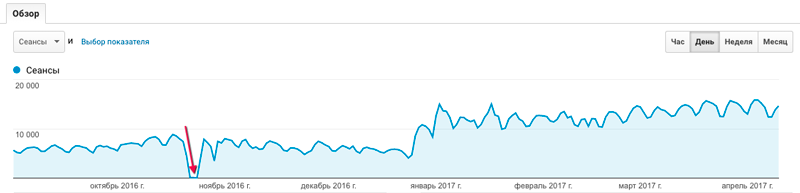
The diagnosis came together into one picture: not a single catastrophe, but a sum of accumulated problems, each amplifying the others. The good news — all of them are fixable.
We built a prioritized plan: first what restores rankings fastest (tech and metadata), then what secures long-term growth (content and links).
This order saves budget and delivers first results within the first weeks.
A six-step plan — from stabilization to growth
The plan's logic is simple: first remove everything that stops Google from ranking the site, then systematically strengthen what brings and retains traffic.
Work ran in parallel streams, but strictly by priority — so each next step rested on an already-fixed foundation.
Analyzing the cause of the drop
We matched ranking and traffic dynamics against Google’s update history, technical changes on the site and competitor moves. This pinpointed exactly what triggered the drop instead of guessing.
DiagnosisTechnical audit
We checked indexing, speed, mobile, structure, duplicates, redirects and microdata. Every error found went into a prioritized spec — from critical to cosmetic — so development hit the mark.
Technical SEOFixing errors in the code
We closed technical gaps, sped up loading and cleaned up indexing. Google began seeing and evaluating pages correctly again — the base without which neither content nor links work.
DevelopmentReworking metadata
We rewrote titles and descriptions for real intent and query semantics. This lifted click-through in the SERP and match accuracy — a fast way to recover some traffic even before rankings grew.
On-pageImproving content
We strengthened existing articles and added new ones: depth of coverage, clear structure, answers to related questions and expertise signals (E-E-A-T) to YMYL standards. Updating the old often paid off faster than publishing from scratch.
ContentLink building
We steadily grew a quality, topical link profile and neutralized toxic links in parallel. The goal — domain authority and trust in health content that holds up against future updates.
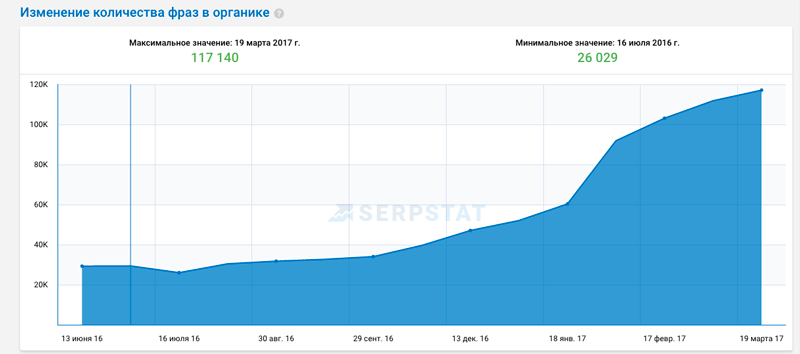
Off-pageWork on semantics and content paid off quickly: the site began ranking for thousands of new queries.
A quality link profile is the foundation of growth
One of the main causes of the drop was low-quality links — they didn't help, they hurt. We worked in two directions: neutralized toxic donors and grew a trusted, topically relevant profile.
No spikes or spam schemes — at a steady, algorithm-friendly pace that doesn't raise flags with Google. The result is visible in the Ahrefs chart:
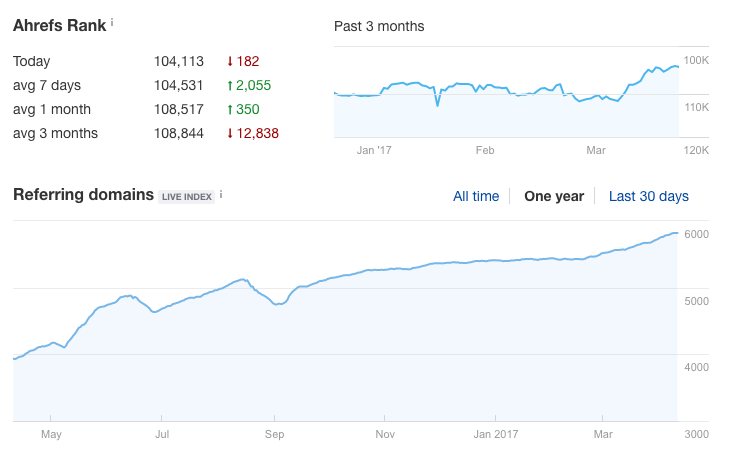
Why does it work this way? In a YMYL niche, links from authoritative, topically close resources are one of the strongest trust signals for Google.
The combination of "deep content + quality links" became the growth engine: content gave the grounds to rank, and links gave the authority to make it work in the competitive US SERP.
According to industry data, #1 sites have on average several times more links than pages in positions 2–10 — and we closed that gap deliberately.
Curious what a plan like this would do for your site?
Estimate the tasks, timeline and growth potential in a couple of minutes.
Decline stopped. Growth — sevenfold
In six months the trend reversed completely — and several independent analytics systems confirm it, not just our internal reports. Below is what exactly grew and why it matters for business.
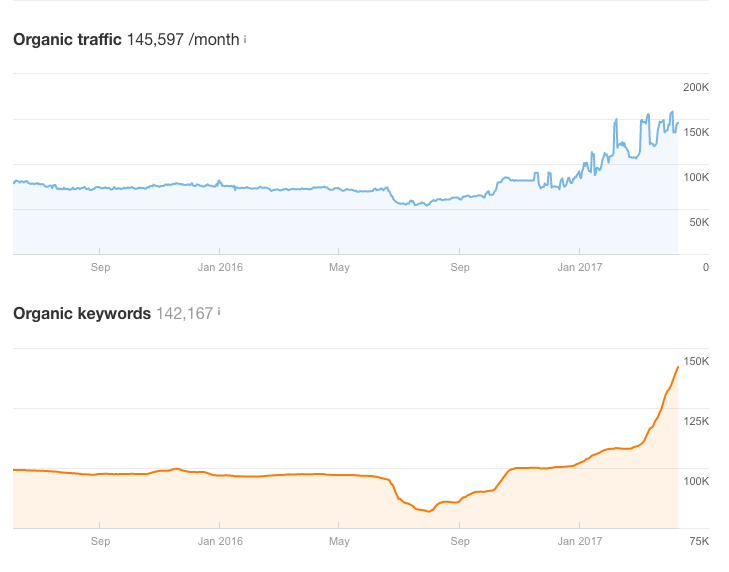
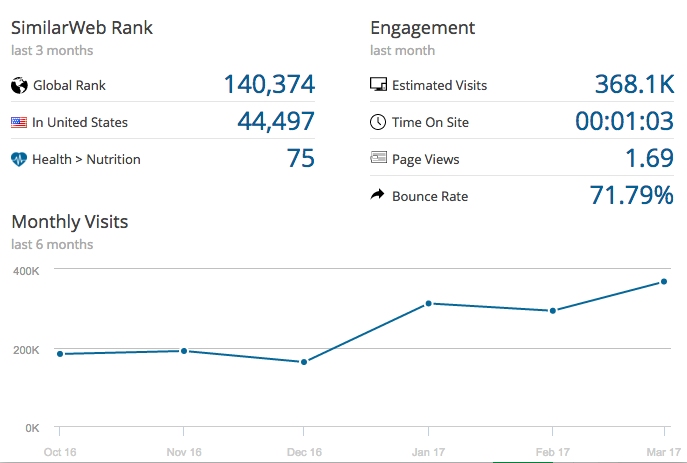
- 7× traffic growth — from 100,000 to 700,000 visits a month in 6 months.
- ×4.5 organic keywords — from 26,029 to 117,140 (Serpstat): reach across thousands of new queries.
- Sessions doubled — from ~10,000 to ~20,000 a day (Google Analytics).
- Growth didn't stop — traffic kept rising on the foundation laid.
Most importantly, the growth proved durable: it rested not on one-off tricks but on a fixed foundation (tech, content, a clean link profile). So after the active phase traffic didn't roll back — it kept growing.
For the project this meant a multiple-fold rise in audience, ad impressions and affiliate income — i.e. a direct return on the SEO investment.
What about AI search? Why this case still matters today
The case started as classic SEO. But the foundation laid — technical health, deep E-E-A-T content and an authoritative link profile — determines visibility today, too.
And not only in Google, but in AI search: AI Overviews, ChatGPT, Perplexity, Gemini.
Content that earned Google's trust has every chance to become a cited source in AI answers. What we add to the strategy today:
Behind the result stands the SEOquick team
Such a turnaround is the result of systematic experience. SEOquick has done search marketing since 2008: dozens of Google updates, penalty recoveries, scaling on competitive markets including the US and Europe.

Nikolay Shmichkov
18 years in digital, 500+ articles and podcasts. Leads strategy and quality control of implementations.

Anatolii Ulitovskyi
Founder of SEOquick and unmiss.com. Focus — AI search, GEO and growth analytics.



Similar growth stories
Binary options website
Penalty recovery + programmatic SEO: 50,000 pages, 130 → 1,700 a day.
View case →English site: Panda penalty recovery
Traffic recovery after an algorithmic penalty in a Western market.
View case →BB.LV — organic leader in the Baltics
Content and technical base made a news portal the niche leader.
View case →Medical website promotion
Growth in the "health" niche with focus on E-E-A-T, content plan and links.
View case →Furniture e-commerce in Poland
International SEO: GEO adaptation, content and link building.
View case →Lumi-Dent dental clinic
YMYL audit, usability and scholarship link building for the brand.
View case →Data sources
- BrightEdge — organic search drives ~53% of website traffic: brightedge.com, searchengineland.com, channel report.
- Backlinko — CTR by position (4M SERPs): CTR stats, First Page Sage, what is CTR.
- Speed & conversions — load-time impact on behavior: monsterinsights.com.
- Links & rankings — leaders have stronger profiles: increv.co, SEO benchmarks.
- Content depth — more links and traffic: Backlinko (912M posts), Ahrefs.
- AI search — AI Overviews, zero-click, ChatGPT/Perplexity: SE Ranking, Superlines.
Project metrics (100,000 → 700,000 visits/mo, Ahrefs/Serpstat/Analytics) are the case's actual data. Industry figures are given as benchmarks.