The main challenge of the project
About the project

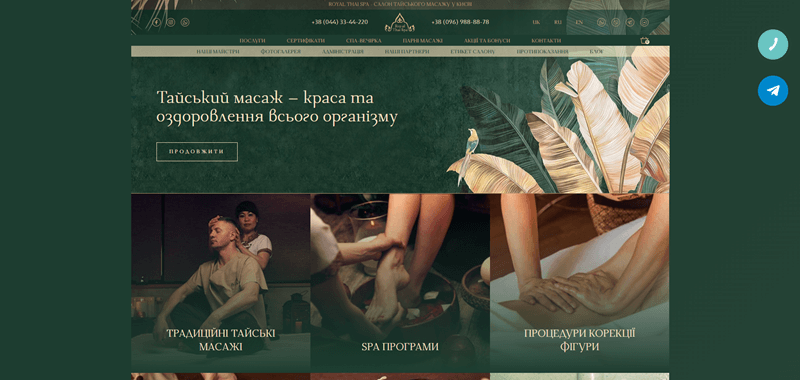
Royal Thai Spa is a chain of premium Thai-massage and SPA salons. The project came to us in October 2024 as a site that for several years had existed in a stable but stagnant state: organic traffic was not growing, competitors were getting stronger, and the structure and technical side had long needed an update.
From an SEO standpoint this is a classic commercial local project in the beauty-and-relaxation services niche — high competition, many branches and geo-dependent queries.

At the start, Royal Thai Spa had:
- a large range of services: massages, SPA rituals, certificates, gift sets;
- several branches across Kyiv;
- a significant volume of content, but with no unified quality system;
- a weak state of technical metrics and usability.
All these factors meant the site ranked lower than it could, and a significant share of traffic was intercepted by competitors — with more modern sites and a better-developed structure.

When Royal Thai Spa came to SEOquick in October 2024, the site looked mature on the outside, but technically and structurally it was in a state that held back growth. A technical audit conducted in December 2024 showed that the site had developed spontaneously: for many years in a row services, new texts, images and sections were added, but without a general SEO logic.
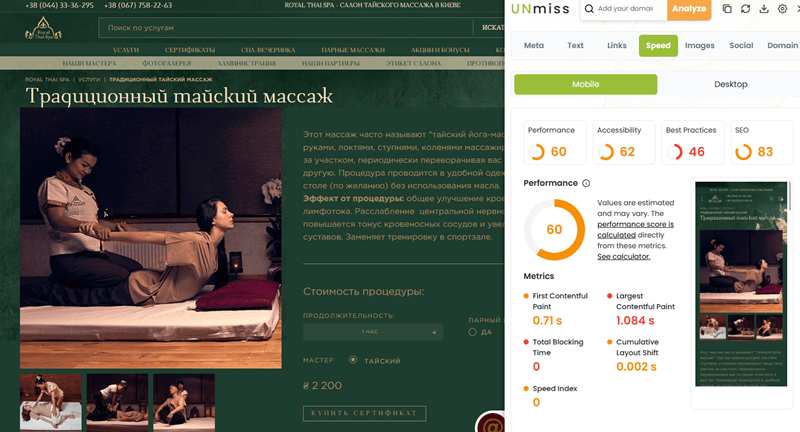
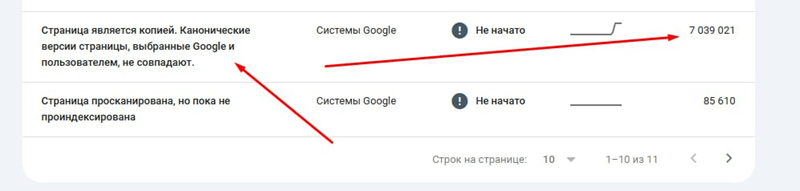
Because of this, search engines indexed the site differently from how it was intended. Some important pages were missing from the sitemap, others had incorrect canonical directives, and some URLs had a nesting level that Google considered "low priority". Load speed and Core Web Vitals were far from the norm: on mobile, most pages fell into the yellow and red zones, which is especially critical for a local business where the user most often visits from a smartphone.

The usability audit in January 2025 confirmed that the technical flaws directly affected user behavior. The site structure looked beautiful but was ineffective:
- service sections were hidden deep in the menu;
- booking buttons did not stand out visually;
- the user's path from the homepage to choosing a procedure was longer than competitors';
- mobile navigation broke context — visitors lost focus, especially on SPA-ritual pages.
The competitor audit conducted in December 2024 revealed another problem: Royal Thai Spa lagged in the modernity of its structure and the completeness of its landing pages. Competitors were already moving to "extended page" models — more text, more blocks, an embedded price list, procedure photos, FAQ. Against this backdrop, Royal Thai Spa's landing pages looked "thin" and less convincing.
The semantic analysis confirmed the site was under-using the niche's opportunities. Many queries about certificates, gift sets, individual massage types and branches were either missing or mixed on a single page, whereas competitors had a separate entry point for each intent. The disordered structure prevented Google from distributing relevance correctly.
The link analysis showed that in the year before the engagement, domain growth had practically stopped: this lowered the site's trust and made it more vulnerable to algorithms.

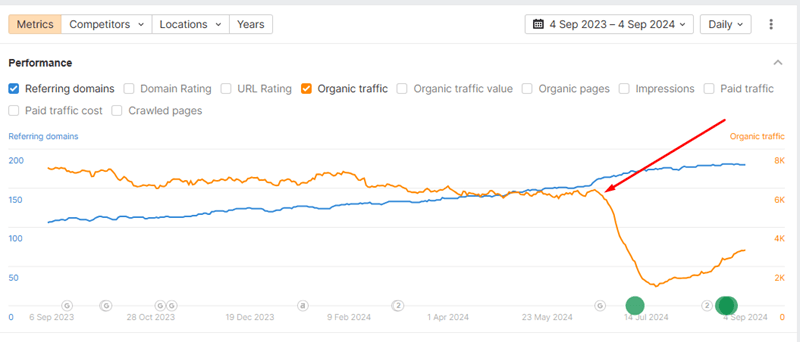
And then in July a traffic collapse happened. All these factors explained why the project was "standing still" despite a strong brand.
A strong brand — but stagnation: the site had grown spontaneously for years without a general SEO logic, with indexing, canonical and Core Web Vitals problems; landing pages looked "thin" next to competitors. In July a traffic collapse happened.
The solution: a stabilize → strengthen → scale strategy — technical reorganization, rebuilding semantics by intent, updating content to the niche leaders' standard and controlled local link building.
Strategy
We built a promotion strategy a year ahead, based on three principles:
stabilize → strengthen → scale.
The first stage was eliminating the technical factors limiting the site's potential. We put the canonical structure in order, assembled a correct sitemap, revised the URL framework and eliminated critical rendering errors. This let Google again perceive the site as a whole, rather than a set of unconnected pages.
In parallel we began improving UX: reworked navigation, moved key CTAs into attention zones, simplified the path to choosing a service, strengthened the mobile version. This was especially important since the audit showed that most users visit the site from a phone and expect a "short path" to booking.
The next step was rebuilding the semantics. Together with Royal Thai Spa we created a new service map: we separated the intents "massage", "Thai massage", "SPA for two", "gift certificates", "rituals", as well as queries for each location. This let us create a structure where each page works for its specific search cluster.

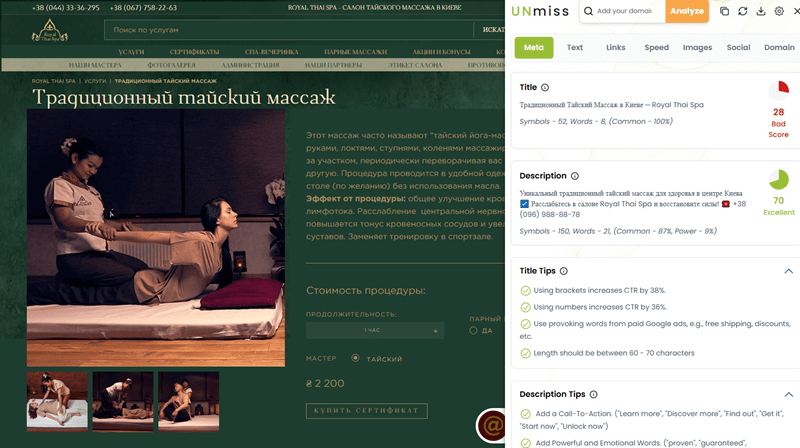
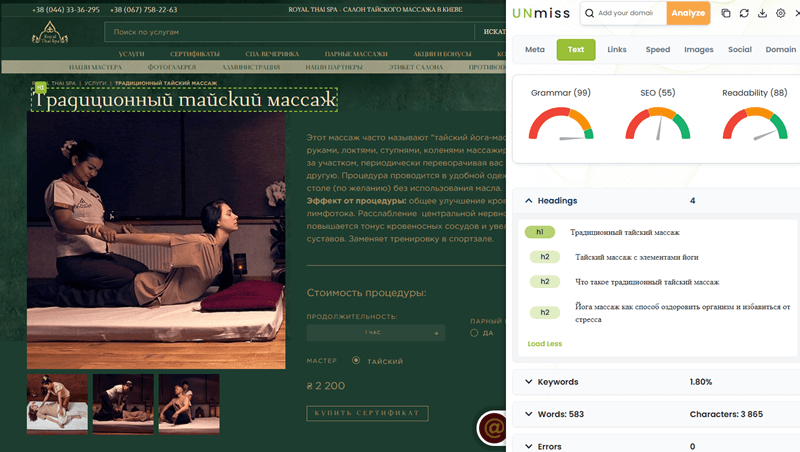
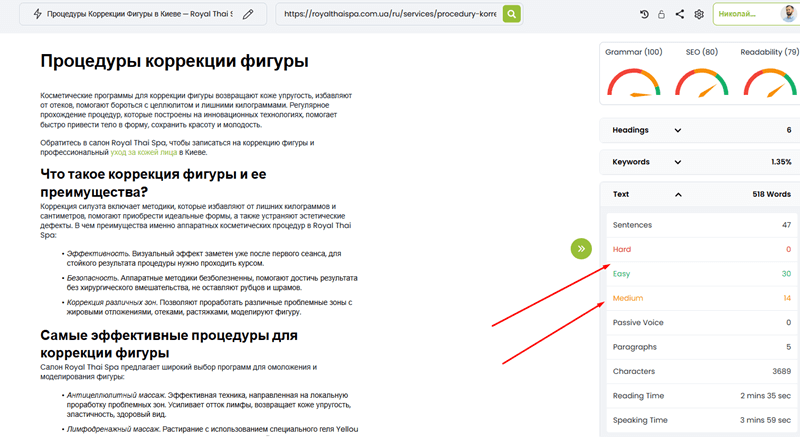
After that we updated the content. Based on competitor analysis, a spec was drawn up to improve the landing pages: we added structured blocks, expanded procedure descriptions, strengthened the texts' expertise, updated H2/H3, reworked the metadata.

And finally, we launched controlled link building. The strategy was not aggressive: we focused on quality local links, relevant publications and topical mentions. This was enough to restore the site's trust and add extra momentum to growth.
The work plan turned out as follows:
1) Technical reorganization
- fixing hreflang / canonical;
- adjusting the sitemap;
- work on the URL structure;
- speed optimization;
- implementing Core Web Vitals recommendations;
- cleaning up junk pages.
The goal — to restore control over indexing and create a base for growth. We worked in parallel with the company UAITLAB, which handled all the development tasks.

2) Strengthening UX and behavioral factors
- reworking navigation;
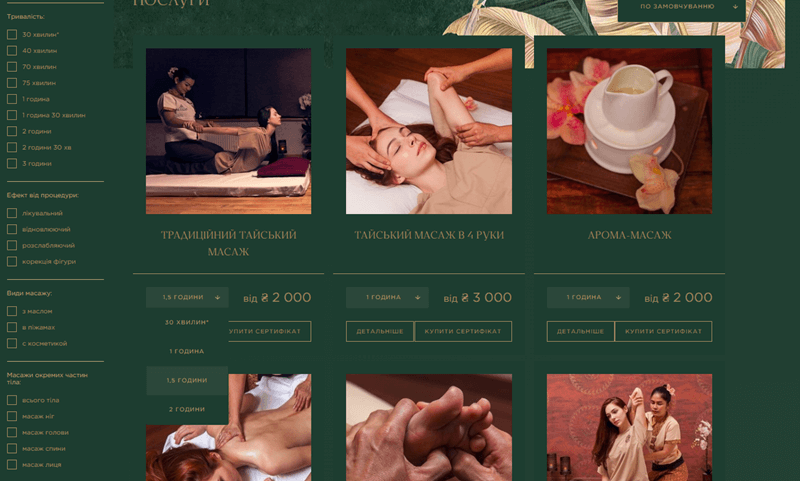
- strengthening service cards;
- emphasis on booking buttons;
- adjusting mobile scenarios;
- visual optimization.
The goal was to grow conversions and improve engagement. And the current site also had UX errors.
3) Rebuilding semantics and structure
- created a service tree;
- separated competing queries;
- distributed intents;
- singled out priority commercial pages.
The task was to remove internal competition and increase relevance.
4) Content optimization
- rewrote metadata;
- created specs for text updates;
- reworked the H2/H3 structure;
- brought commercial pages up to the standard of the niche leaders.
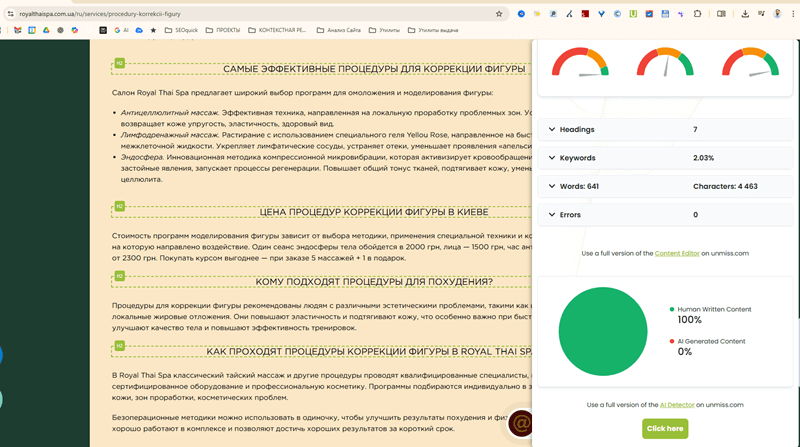
The site had a huge amount of AI content located on category pages and product cards. The client kept the AI text on product cards, but on categories we fixed it.

5) Link building and trust recovery
It was decided to focus on:
- quality local links;
- topical publications;
- commercially relevant mentions;
- gradual domain growth.
Every month — analysis of positions, CTR, competitors, reallocation of priorities.

Work performed
The work went in parallel across several streams — technical, structural, content and external.
Technical optimization
In late 2024 — early 2025 we brought the site up to technical standards: fixed hreflang and canonical errors, reworked the sitemap structure, optimized speed and improved Core Web Vitals. In particular, heavy images were reworked, blocking scripts optimized and mobile rendering stability improved. On large commercial pages, speed grew and INP moved from the red zone to yellow and closer to green.
UX improvements
The UX audit was an important step — it showed the site was losing clients before it even managed to show content. We reworked the menu structure, made CTAs active and noticeable, simplified navigation across SPA rituals and massages, and shortened the user's path to the booking form. This directly affected conversions and behavior quality.
Semantics and content
The semantic core was fully reworked: we redistributed queries by their intents and created the missing entry points. Based on competitor analysis, we expanded the landing-page structure, created new blocks (ritual descriptions, contraindications, procedure stages, FAQ) and updated metadata for target clusters.

All content went through proofreading and SEO editing, which made it possible to format pages uniformly and increase their relevance.

Off-site promotion and trust growth
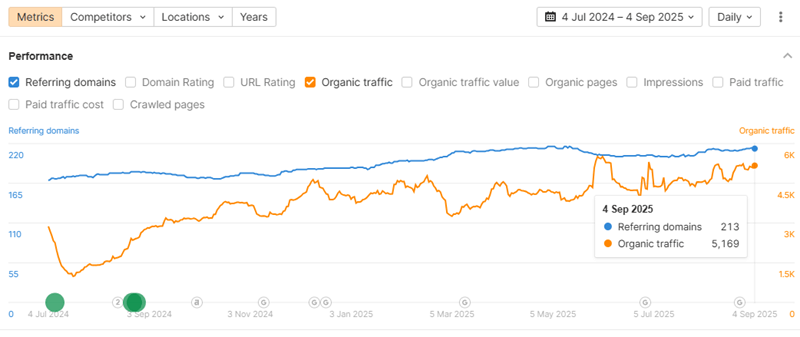
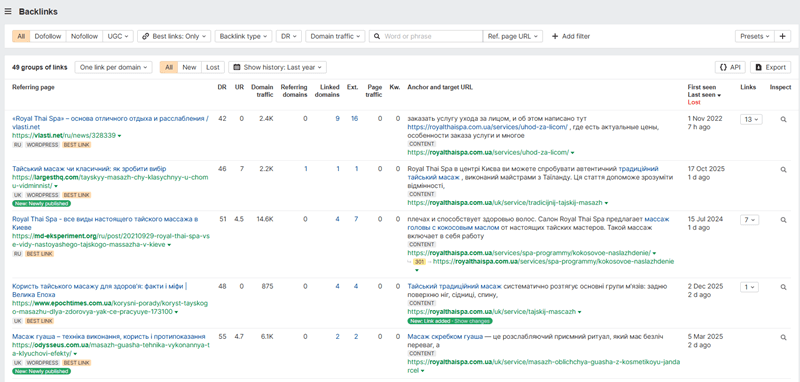
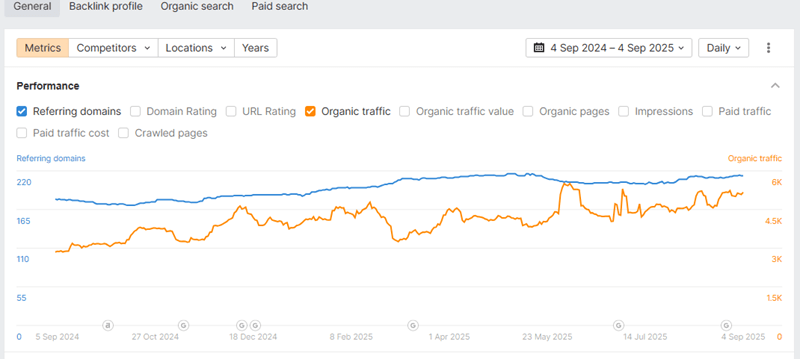
Over the year we strengthened the link profile through quality local and topical links. The CSV shows that the number of domains and link points increased evenly — without "spikes" that could trigger filters. This gave the site extra stability and helped it lock into the TOP for commercial queries.

Analytics and adjustments
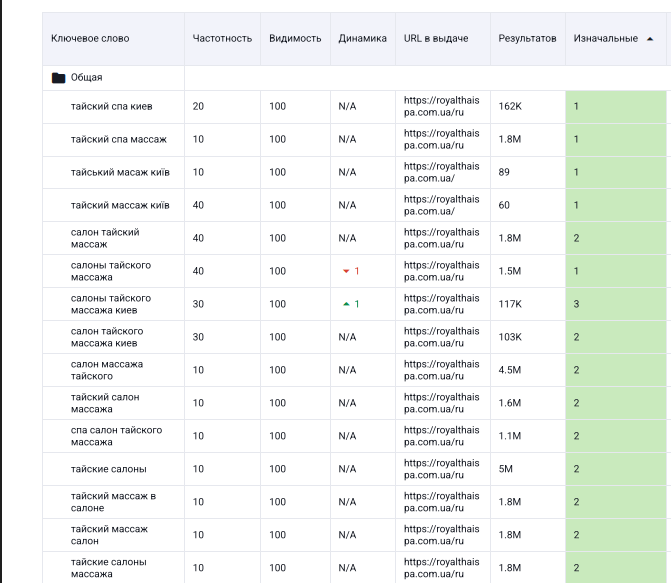
Two position reports (April and May 2025) demonstrate steady growth:
- an increase in TOP-10 queries;
- strengthening of certificate and SPA-procedure pages;
- growth of local queries ("Thai massage + district");
- improved CTR after the metadata update.

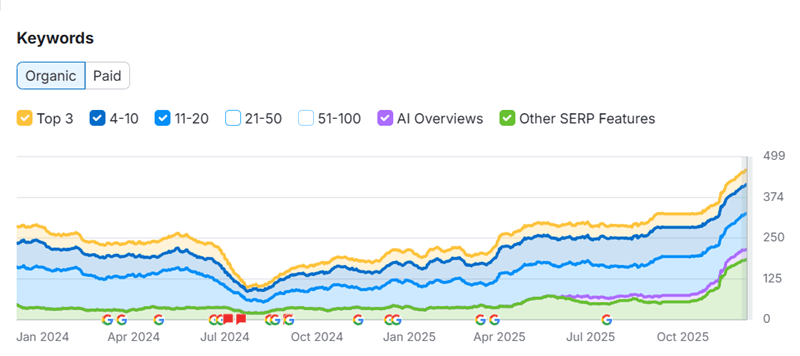
The analysis shows that from the end of 2024 the trend goes upward without sharp drops — a sign that the strategy is built sustainably.
Result
| Metric | Before (start) | After (autumn 2025) |
| Organic traffic | 7–9K visits/mo | 18–20K visits/mo (+120–150%) |
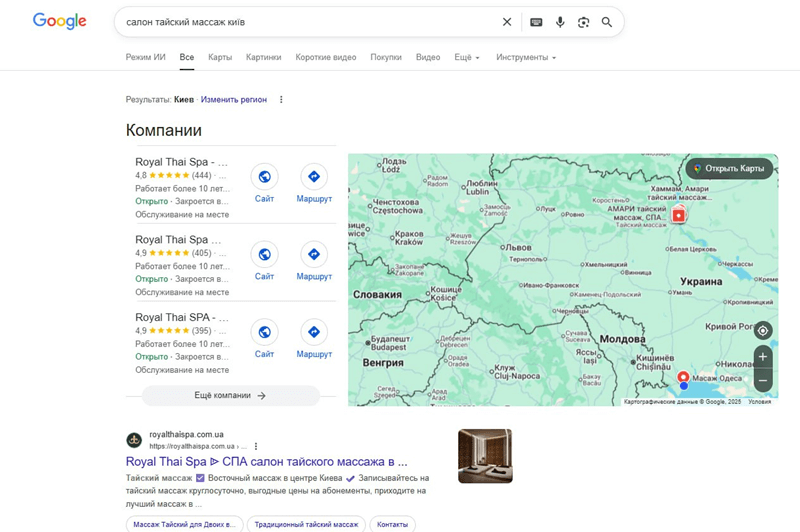
| "Thai massage Kyiv" | — | #1 (the most converting query) |
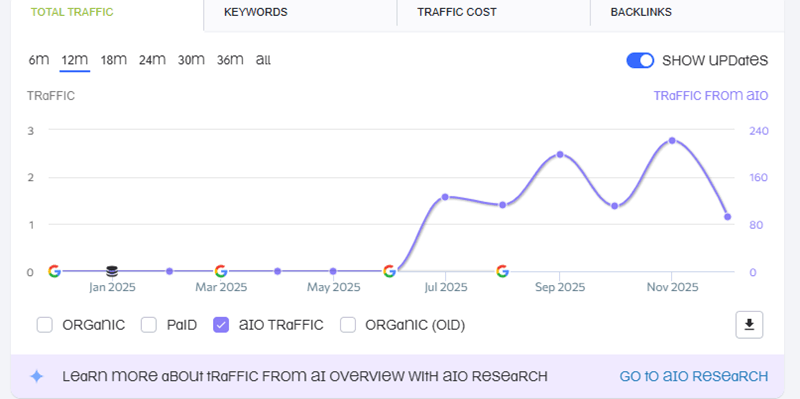
| Dynamics | 12 months of growth without dips + strong AI-results performance | |
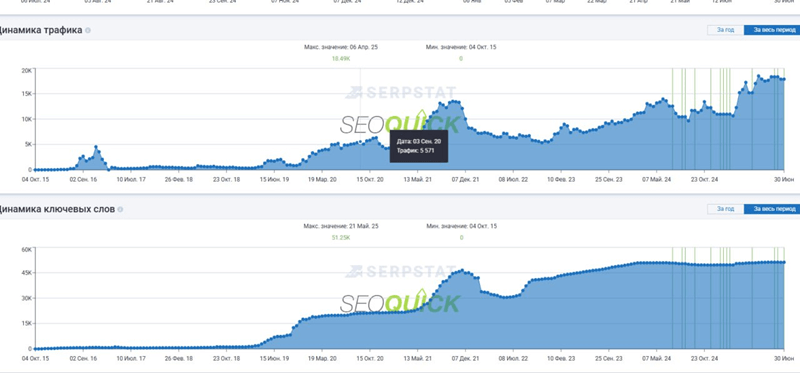
Source: web analytics for royalthaispa.com.ua, October 2024 — October 2025. The development work was done by the UAITLAB team.
A year of work — from October 2024 to October 2025 — gave Royal Thai Spa exactly the effect it had lacked before the cooperation: predictable, stable and organic growth.

- at the start, organic traffic was in the range of 7-9K visits per month;
- by mid-2025 — 15+K visits;
- by autumn 2025 the site steadily held 18-20K visits, crossing this mark in some periods.
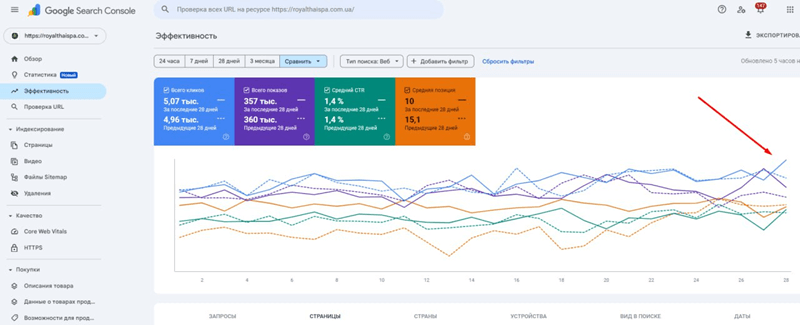
Growth of 120-150% for a local business in a competitive niche is a result that speaks of a deep transformation of the site, not cosmetic optimization. As of the latest month, we showed steady traffic growth on the project.

But something else matters more: the organic chart became "smooth" — no dips, no spikes, no sharp fluctuations. This means that:
- the structure finally matches query logic;
- behavioral factors improved;
- technical errors no longer interfere with the index;
- Google perceives the site as mature and useful;
- content quality exceeds the market average.
The project entered a state of managed growth: each updated page produced an effect, and these small steps added up to large shifts in visibility.

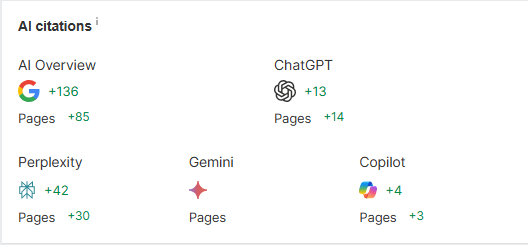
The site also achieved very high metrics in AI results.

For the query Thai massage Kyiv, at the time of work it held 1st place (the most converting query in analytics).

Royal Thai Spa today is a site with a modern structure, competitive content, high speed and a clean technical background. Over the year it went from "potentially strong but underdeveloped" to a full-fledged niche leader across many directions.
Project team
The project was handled by the SEOquick team:
- Nikolay Shmychkov — SEO strategy (Deputy Director)
Full team and roles — on the About page.
What's next
A similar services case: SEO for a Home-Appliance Repair Service Site — local SEO + a content tandem.
Have a local services business? The concrete next step is to get an audit and a growth plan for your region and niche.