SEO Optimization for GPT — A Practical Guide (2026)
AI assistants increasingly answer on the user's behalf, never sending them to your site. I break down how to make ChatGPT, Gemini, and Perplexity cite you specifically: technical accessibility for crawlers, structured data, content architecture, and honest outbound links. And why, by 2026, GEO optimization has stopped being an experiment.


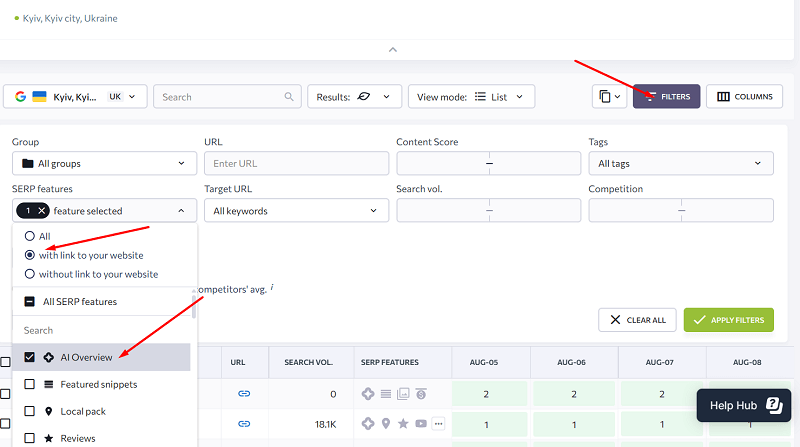
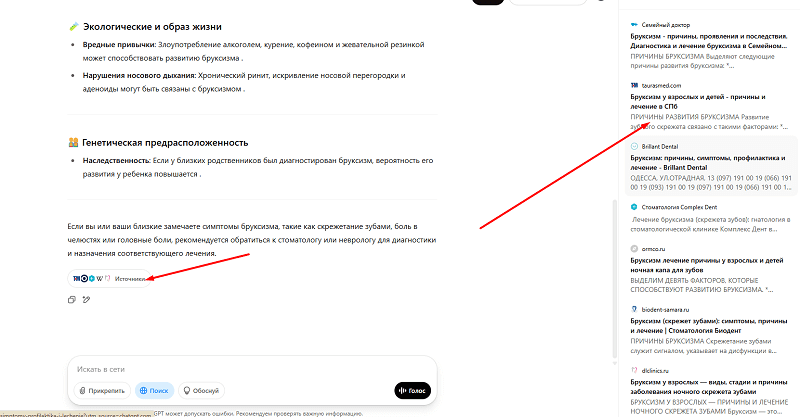
When GPT builds an answer, it can surface the sources of the materials it found.
And if you ask the chat to find objects matching a query, it returns something close to a search results page.
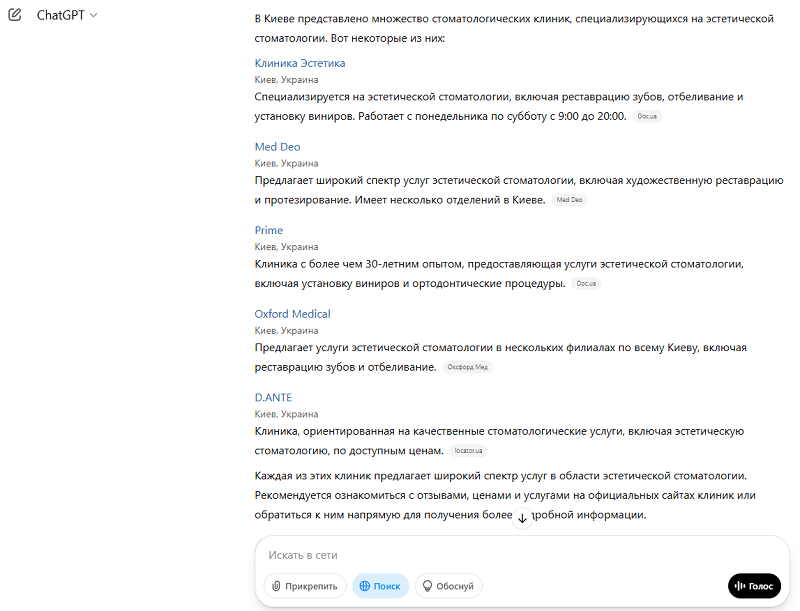
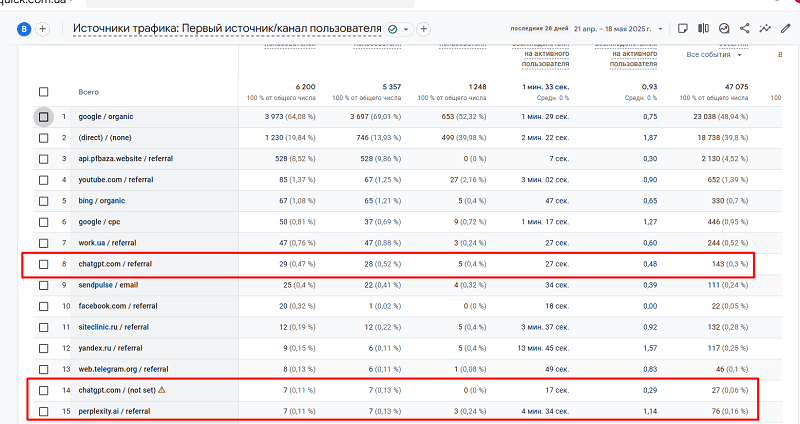
One curious detail: all links from GPT come tagged with the UTM marker “utm_source=chatgpt.com”. Each AI uses a different marker. Sources like these have probably already started showing up in your Google Analytics.
Below is a full list of practical tips for increasing your chances of landing in those recommendations.
Types of AI search results
Demand for this topic surged after my latest webinar, where we discussed how to track GPT results — and discovered an interesting picture:
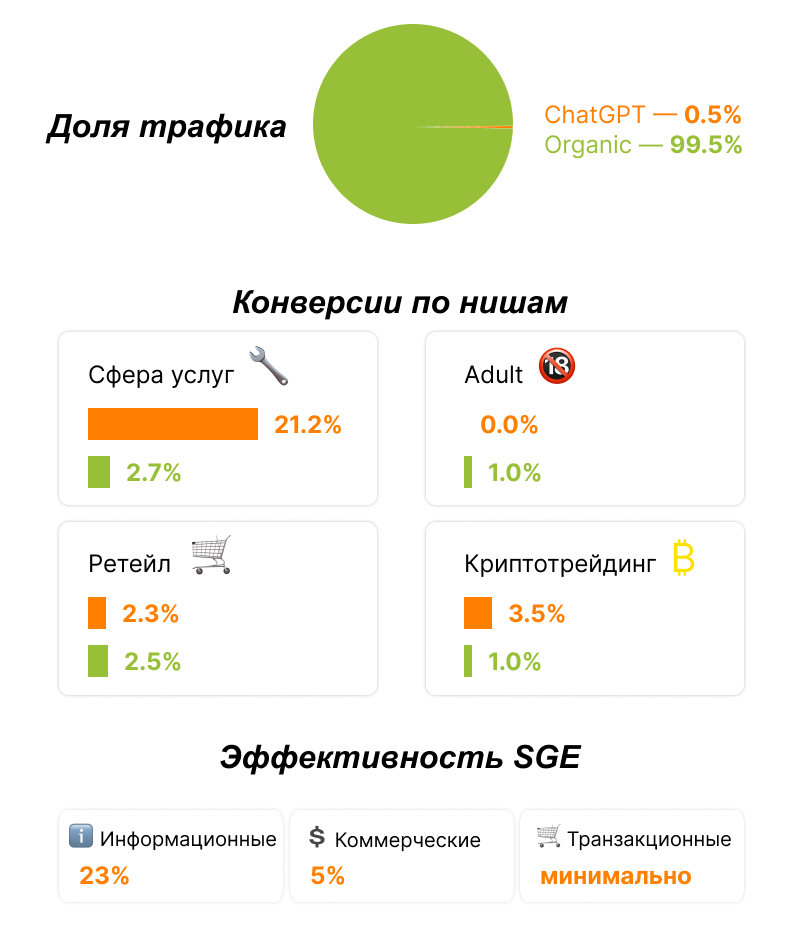
- Compared to organic, ChatGPT traffic sits at around 0.5% (based on 150 sites analyzed in the SEOquick database).
- Conversion rates varied across niches, but they were 7 times higher in the services sector (2.7% in Organic search and 21.2% in ChatGPT).
- The lowest conversion rate was in retail (online stores) at around 2.3% — while in Organic search it was 2.5%.
- There were almost no conversions in the Adult niche (sex shops) — that traffic is predominantly informational.
- In crypto trading and binary options, FTD metrics (first deposits via clicks on affiliate links) showed 3.5 times higher effectiveness for links from ChatGPT. Among content, narrowly specialized instructions performed best.
So landing in AI answers objectively delivers what you need — sales. And while this sprout hasn't grown into a tree yet, everyone is rushing to stake out a place there before the competitors arrive. And it's growing fast: in Q1 2026, AI search traffic grew by almost 43% year over year and reached about 9% of search-visit volume, with ChatGPT accounting for roughly two-thirds of that flow (Gemini, Claude, and Perplexity are actively taking the rest).
“Landing in AI answers” is a very broad term: each system has its own display formats and its own rules for building these blocks. There's no single principle here like in classic SEO — there are nuances that matter when planning content.
AI Overviews (SGE) in Google
AI Overviews are blocks with generative answers that appear above the regular organic results in Google. So far they're rolled out not in all countries and not in all languages. The content is generated automatically, based on content from open sources and the search results. The algorithm behind it is Gemini — Google's new AI.
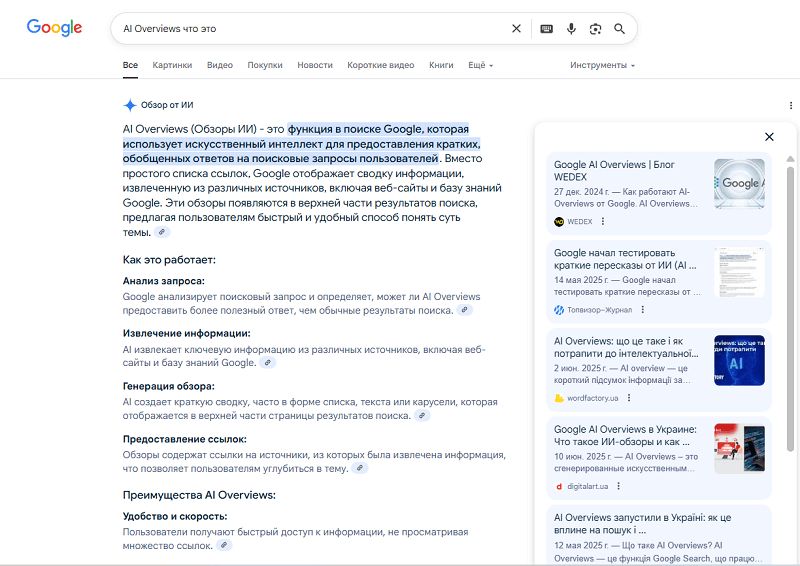
By 2026, coverage has grown dramatically: according to BrightEdge, AI Overviews are present in roughly 48% of tracked queries (Google cites a figure of “about 50%” of US searches). They fire most often on informational queries — around 39–50%, reaching the upper bound on definitions and explanations. At the same time, 99.2% of the keywords that trigger AIO have informational intent — on commercial and transactional queries the block barely shows up at all.
In fact, in certain topics AIO answers can reach up to 50% of informational queries — in the dental niche, our own research found that out of 1,546 informational keywords, 701 contained AIO answers when tracked in SERanking.
The answer is always standardized, unlike other AIs:
- A summary of 1-2 paragraphs.
- Average content length is around 280-300 words (about 2,000 characters)
- It may contain a list, a table, links to sources.
- It often includes 2-3 links (citations) showing where a fragment of text was taken from.
Context Snippets in ChatGPT
With the “Search the web” feature enabled, ChatGPT uses results from Bing, Google, DuckDuckGo, and API sources to build its answer. It doesn't always show the source, but increasingly it inserts a “link” under the answer marked with utm_source=chatgpt.com
That's exactly what you can track in Google Analytics by traffic source, and it's exactly why we're writing this material right now.
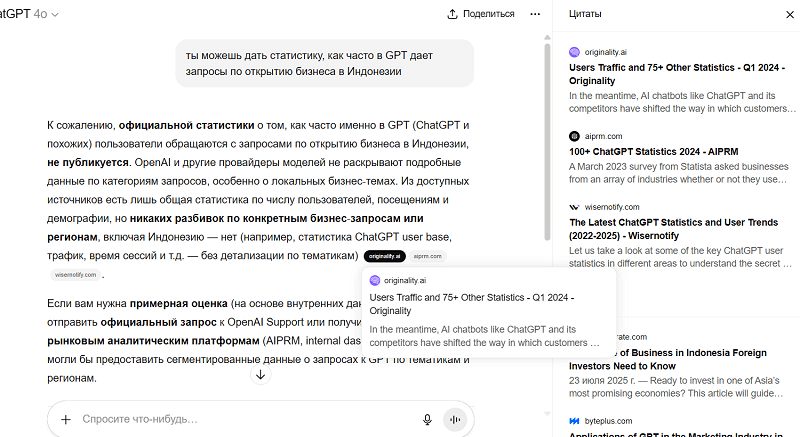
GPT inserts a link if:
- The content fully matches the query intent. For example, you wrote an article “How to choose a voltage stabilizer for a private home,” and it has a list with models, criteria, and recommendations. Here it's important not just to be the first GPT finds, but to be one of the few.
- The page delivers a complete, precise thought. For instance, the content source is an instruction with clearly laid-out steps, and GPT quoted only part of it. Or the material contains statistics, figures, research.
- The page has a proper snippet. GPT picks up the description, title, and first H2/H3 — if they already contain a mini-answer, it will most likely take them as justification and show the link.
- If the topic requires multiple viewpoints — for example, why X is better than Y — it may show several links. For instance, any block where it wants to reference product reviews.
- If the answer is assembled like a “Frankenstein” from different sources.
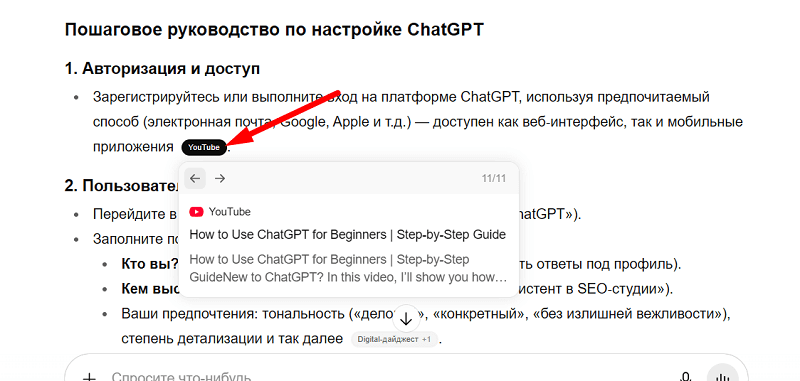
As an example, an instruction can have up to 11 links shown that all relate to a single paragraph!
Grok
A little-known chat in Ukraine and practically invisible — it doesn't tag its links. If Grok references a web page or an X post, it provides the URL in its raw form, without additional parameters like utm_source.
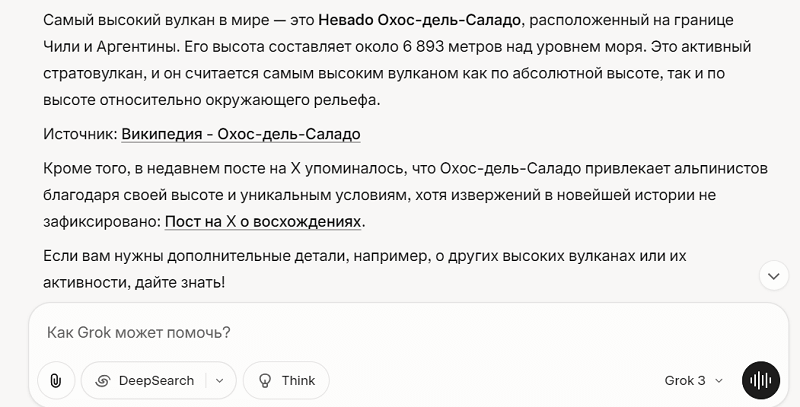
Links are usually highlighted as Source: and written as an anchored link.
When Grok adds links:
- When a real-time search is performed (for example, via DeepSearch or when data needs clarifying).
- When it references specific posts on X (formerly Twitter) or web pages directly related to your question.
- When information is taken from publicly available sources such as Wikipedia, news sites, or other authoritative resources.
Other AI chats
Beyond the most popular chats, there are several others today. And although their traffic is very small, they're worth pausing on.
Perplexity.ai
- Shows a list of sources right at the bottom.
- Most often takes FAQ format, tables, lists, definitions.
- Indexes pages with Schema.org/FAQPage, HowTo, Article well.
Copilot (Bing AI)
- Closer to Google SGE, but works on request rather than by default.
- Shows 3-5 links with citations, often forms the answer as a list.
Claude (Anthropic)
- If internet access is allowed, it also uses Bing/Google.
The most “picky” about content structure and style.
Where GPT gets its information
Any GPT model (as of 2026 the flagship is GPT-5.5, with a knowledge cutoff in December 2025) has two sources of information. The first is built-in knowledge, i.e., the data the model was trained on. This knowledge covers the period up to the cutoff date and isn't updated — meaning if a site, article, or other content didn't make it into the training set before that date, the model simply doesn't know about it. This training base includes data from open sources: sites, books, articles, forums, technical documentation, and so on, especially if they made it into Common Crawl, Google Scholar, Wikipedia, or were frequently cited. So you can no longer get in there. If your site was promoted well in the past, it's already there.
The second source is web search. Today ChatGPT can search in real time, and for paid users search is increasingly enabled by default — but in free access and on older models it still doesn't always trigger.
Search doesn't work like Google; it's more of a combined scanner: it uses both search engines and OpenAI's own mechanisms for crawling and analyzing content (including fast scanners and API access to databases).
So if you publish something new after the cutoff date, the model won't “know” it from built-in knowledge, but it can find and use it if the user enabled the search feature and phrased the question so that the system decided to use the internet. However, such data isn't remembered and isn't added to the core knowledge base.
So if the goal is for ChatGPT to mention your content without needing to search for it online, it's important that it was published well before the cutoff date and made it into training datasets (especially Common Crawl), or that it's regularly mentioned on large platforms indexed by Google, where ChatGPT can find it during a real search query.
No one can directly (not even GPT) verify whether a specific site is in a model's training base. OpenAI also doesn't publish a list of all the sites used to train its models.
However, I can say the following:
- If your site is open to indexing (not blocked via robots.txt) and existed before 2023, it most likely made it into Common Crawl or other public datasets used to train GPT models.
- If the site published articles, guides, and reviews — and especially if they were mentioned on third-party resources (forums, blogs, social media) — the probability of getting into training is even higher.
- The mere existence of a site doesn't guarantee it will “make it into the answer.” The model may not use it directly if it wasn't cited in mainstream sources or lacks a clearly expressed structure of expert content that the model reads well.
Technical optimization of the site
For a site to land in recommendations from ChatGPT, Gemini, Claude, and other AI assistants, it's important not only to write expert content but also to ensure its technical accessibility for language models (LLMs). Most generative AIs use scanners based on API access as well as their own crawling architecture. It's not Googlebot, but they work on similar principles — with a number of differences.
Let's break down all the points of technical optimization separately.
Configuring Robots for GPT
Make sure the site and key sections aren't blocked in robots.txt and are accessible for crawling. If you're creating dedicated pages for AI traffic — be sure to open them for indexing.
The setup scheme is simple: you specify a User agent and decide which folders of the site to open for it and which to close.
| Platform | User-agent | Description |
| OpenAI (ChatGPT) | ChatGPT-User or GPTBot | Used when accessing sites via the “search enabled” feature |
| Anthropic (Claude) | Anthropic-User | May appear as part of crawling in Claude Pro (limited) |
| Google (Gemini) | Google-Extended | Used for crawling content to train models, configured via robots.txt |
| Microsoft (Copilot / Bing Chat) | Bingbot, Microsoft-AI | Bingbot is used both for traditional SEO and for AI answers |
| Perplexity AI | PerplexityBot | Actively scans sites in real time |
| You.com | YouBot or YouSearchBot | Used when generating AI answers in You.com search |
| Meta AI (LLaMA / Meta AI assistant) | facebookexternalhit, a new bot may appear | For now crawling happens partially, more for social media |
| Amazon (Alexa LLM) | AlexaBot | Being clarified, but may be used to prepare LLM prompts |
| DuckDuckGo AI Chat | DuckDuckBot | Used in collecting content that may be applied in AI interfaces |
Cohere AI, Mistral, Mistral Chat, Pi from Inflection AI, and others don't have their own clearly defined agents and most likely use other search platforms.
Adding the experimental llms.txt file (by analogy with robots.txt) may help — it's used by some LLM crawlers (for example, Perplexity's). Specify in it which directories are open or forbidden for crawling.
If you want to hide your site from AI scanners, here's an example Robots configuration.
User-agent: GPTBot
Disallow: /
User-agent: PerplexityBot
Disallow: /
User-agent: Google-Extended
Disallow: /
Google-Extended is the Gemini agent. It previously included Bard (now integrated into Gemini), as well as the AI search feature (AI Overviews, SGE — Search Generative Experience). Gemini doesn't use a separate crawler — instead, the standard Google search bots, such as:
- Googlebot — the main site scanner for search.
- Google-Extended — a special user-agent through which Google collects content to train its AI models, including Gemini.
GPTBot (OpenAI's official crawler) really does follow the instructions written in robots.txt. This is stated in its official documentation. With the current robots.txt settings, GPTBot will not crawl your site, and the content won't make it into the base available for generation (in web-search mode).
Configuring LLMS.txt
The llms.txt file is a text document that contains structured information about your site, intended for use by large language models (LLMs). It helps LLMs better understand and process your site's content, which in turn allows them to give more accurate and relevant answers to user queries.
It's written in Markdown format.
# Your project name (for example, Product Documentation)
> A short description of your project.
## Category 1
* [Link to page 1](https://example.com/page1.html)
* [Link to page 2](https://example.com/page2.html)
## Category 2
* [Link to page 3](https://example.com/page3.html)
* [Link to page 4](https://example.com/page4.html)
llms.txt is an unofficial, experimental initiative. It isn't described in any standards and isn't officially supported by OpenAI. Some companies (for example, Perplexity and Anthropic) have stated that they read it, but by mid-2026 the reality is sobering: the file is implemented on roughly 10% of domains, and most crawlers (GPTBot, ClaudeBot, PerplexityBot, OAI-SearchBot, Google-Extended) largely ignore it and parse HTML directly. Simply having an llms.txt doesn't measurably improve your chances of being cited. If you still need to set it up, there are a couple of ways.
But it's not a clone of robots.txt, and it has different tasks. The file can include the full version of the documentation or all the site's content in a single file, giving the LLM more detailed information.
For web resources on WordPress, a convenient plugin has already been released. For other CMSs — it's worth searching, but you can create it yourself.
The location of this file is in the root folder of the site (public_html, for example).
If you want to restrict or allow GPT access — use only robots.txt. llms.txt can be used additionally — for Perplexity or future compatibility, but not as the primary control method.
Clean HTML structure
AI assistants like ChatGPT, Perplexity, and Copilot collect content from sites via their own crawlers, as we already understood earlier. But many mistakenly think they “read and understand” what you've written.
GPT and other AIs don't “guess” meaning — they look for clear patterns, a comprehensible structure, and highlighted fragments (heading-answer).
These crawlers don't run JavaScript, don't click buttons, don't navigate tabs — they work almost like Googlebot 10 years ago, that is, they read only the raw HTML.
So if your site is poorly structured, important content doesn't load without JS, or the HTML is written in a tangled way — the AI bot may simply fail to understand what your material is about. And then GPT won't be able to include it in its answers.
- All important text must be visible in the page source (View Source).
- Don't rely on JS frameworks without SSR (for example, React without Next.js).
- AI bots won't wait for data to load via API, won't “understand” hidden text.
The screenshot shows the code of a complex tool, and here's the only thing GPT can see from this page — because all the content here is “loaded” via interactions.
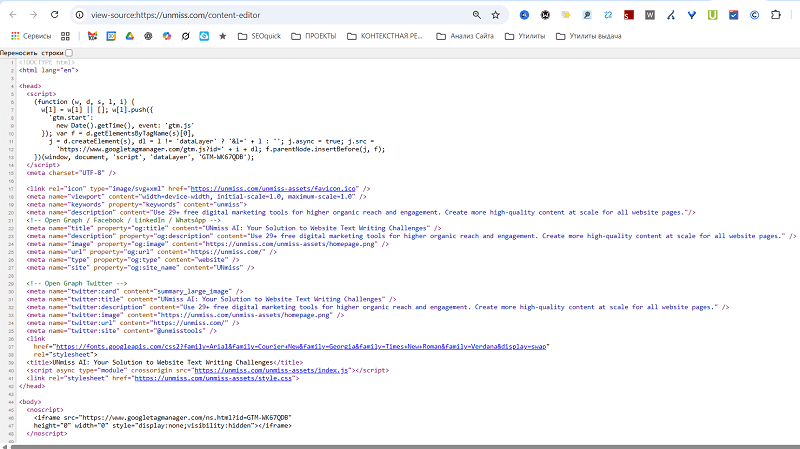
The second part of the problem is the widespread use of the <div> tag in HTML, while classic semantic tags may be completely ignored:
| Heading | Example of semantic tags |
| Main content | <main>, <article> |
| Headings | <h1>, <h2>, <h3> |
| Navigation | <nav>, <ul><li> |
| Sidebar | <aside> |
| Footer | <footer> |
Follow these simple tips:
- Avoid HTML errors, unclosed tags, and excessive nested <div>s.
- Don't hide important text in CSS or invisible blocks (display: none).
Pages with “dirty” markup are simply ignored — the bot can't extract any value from them.
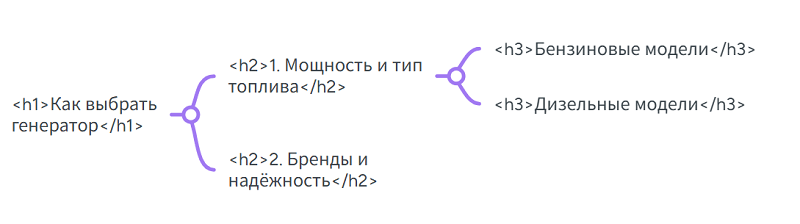
GPT models really do account for the hierarchy of headings — it helps them understand the structure of the thought, the order of blocks, and identify the page's key topics.
Follow the tree rule:
- 1 H1.
- Several nested H2s (at least 2).
- At least 2 nested H3s.
GPT handles texts better where:
- paragraphs are no longer than 4-5 lines;
- lists <ul>, <ol> are used for steps, advantages, comparisons;
- headings highlight logical blocks.
The formula we've been promoting in copywriter briefs for at least 5 years now — “short paragraphs + lists + headings + visual structure” — turned out to be prophetic.
Why is clean code important?
- AI systems work with time constraints: slow pages may be ignored. Use a CDN, image compression, lazy-load, and other classic optimization techniques.
- This is especially relevant for those AI services that do multithreaded loading via API (for example, Copilot or Perplexity).
- Content must be accessible without registration, redirects, nested forms, and JS loading. The simpler and more direct the access to the text — the higher the probability the bot will process it.
- Placeholder pages, landings without text, or single-pagers barely participate in AI results.
Structured data for materials
If you want your content to be perceived not just as text for a human but as structured information for a machine, then it's worth studying everything about structured data. There's a certain “base list” of markups you should put on your site, and to read about it, it's worth heading to Google's Structured Data section.
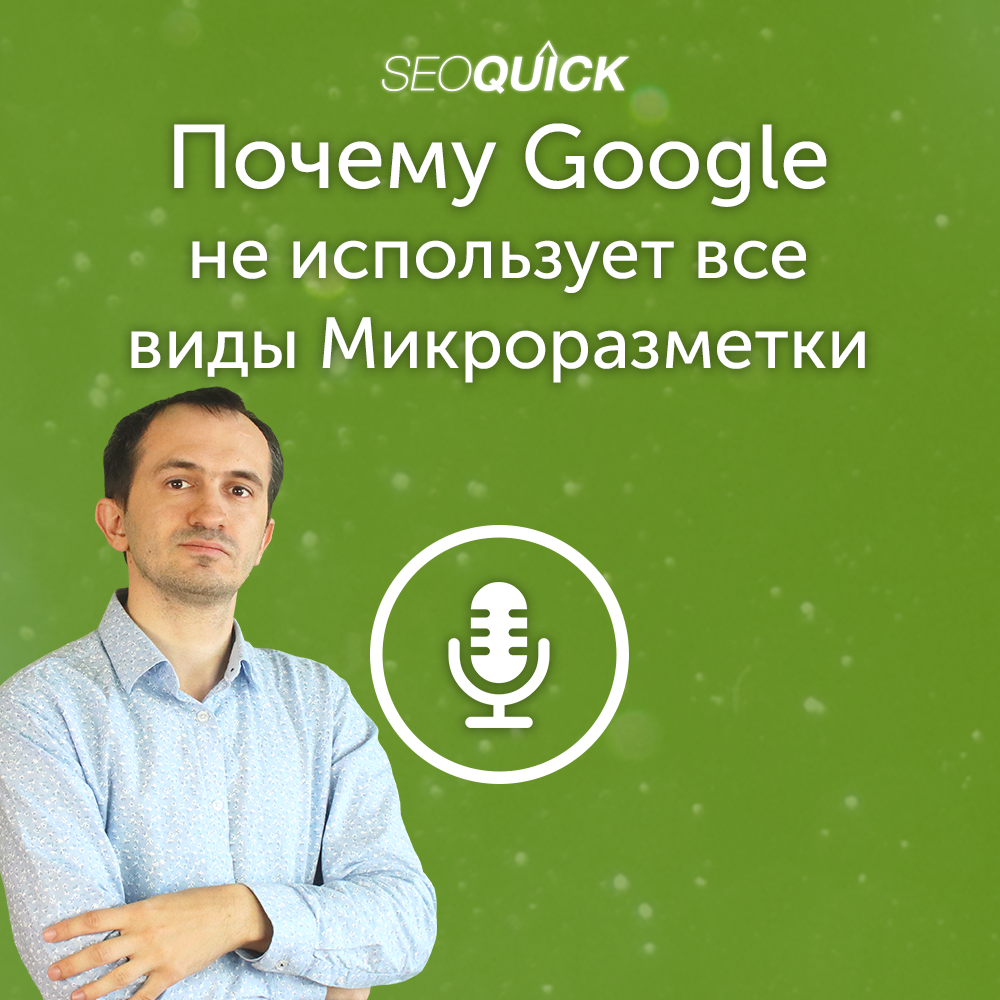
ChatGPT, like search engines, orients itself by the page's semantics. When you use JSON-LD markup (or Microdata, but JSON-LD is better), you directly explain to the bot: here's the question, here's the answer, and here's the step-by-step instruction.
Structured data helps the AI clearly determine: where the question is, where the answer is, where the instruction is, and where the author is. Especially important are:
- Article, BlogPosting, NewsArticle — for articles.
- Person — for describing the author (include the sameAs field with social profiles).
- The Question/Answer markup block helps robots understand that there's a specific answer to a question here, one that already has a selected, confirmed answer marked by the AcceptedAnswer tag. This makes it easier to include your text in answers to seemingly simple but practical questions.
- SiteNavigationElement helps it understand the article's content.
- Breadcrumblist (breadcrumbs) also play a role — they indicate how the material is embedded in the site's hierarchy, and GPT better understands the topic and relationships between pages. This matters not only for SEO but also for building the “knowledge map” the model keeps in its head.
- If you have a block of frequently asked questions at the end of the article, adding Schema.org/FAQPage to it tells the model that this is useful structured content that can be inserted into an answer.
- HowTo markup is especially useful for instructions and guides: it shows that the content contains a step-by-step process with actions, images, and a result.
Links as a ranking factor in GPT
Yes, external links (outbound links) matter for generative models like GPT. And not for passing “weight” like in classic SEO, but as a signal of trust and source transparency.
You heard right. Outbound links. Not inbound.
When GPT sees that an article relies on verified, authoritative materials, it's more likely to:
- consider the content well-developed and substantiated;
- use it in answers as a “secondary” or even primary source;
- raise trust in the site as a point of information synthesis.
What's worth linking to and what isn't? Let's sort it out. Here's what you can link to:
- To official documents, research, standards — Google, gov, ISO, developer portals, Wikipedia, Google Scholar.
- To primary sources, if you're referencing someone's data or quotes.
- To key authoritative sites in your niche — for example, Moz, Ahrefs, FDA, StackOverflow, ISO, PubMed, W3C.
And what you shouldn't:
- Links GPT found itself — it can return not-so-high-quality results. I wrote about sites like these in our Telegram channel.
- Hallucinated links. Sometimes GPT systems invent links because they couldn't find them, but the content on this topic apparently exists in their base. So the link is fabricated — it may be broken, redirect to the homepage, or somewhere else.
- Links to low-rated sites. Remove such links unless they're the main target of your anchor.
- Links to advertising or affiliate materials without justification.
- Spammy sources, aggregators, and sites without content.
- Mechanically “stuffing” links without any connection to the topic.
Instead of a conclusion: add links when it strengthens the substance and usefulness. GPT doesn't treat such links as a “weight leak”; it reads them as an argument — and that's exactly what helps you land in its answers.
A content plan for GPT
For your articles to end up in answers from ChatGPT, Gemini, or Perplexity, it's not enough to simply “make good content.” You need to understand how LLM models look for information, by what signs they select pages, and at what stage they “filter out” low-quality materials.
Below is a step-by-step methodology for building a content plan for GPT, based on the results of analyzing search results, parsing AI, and the behavioral patterns of the models.
Finding topics that aren't in the results
The main mistake is writing what already exists. AI doesn't duplicate existing content; it picks the most complete and structured answers. So first you need to find topics that aren't well covered:
- we monitor Reddit, TikTok, YouTube Shorts;
- we collect questions from comments, forums, stories;
- we check for existing answers in Google — if a full-fledged article already exists, we skip it.
If you need a content plan for GPT,
write to me, and we'll assess the scope of work for your project and prepare a commercial proposal for creating content that wins traffic in Google and GPT!
Building a pool of keywords and queries for GPT
GPT builds search queries with a particular logic: keyword + qualifier + modifier + filters. You can adapt to this, shaping your semantics the way AI systems “think”:
- “how to choose a generator for a country house in 2026”;
- “a guide to configuring X for conditions Y”;
- “which is better: A or B”.
Additionally, use filters: site:, filetype:pdf, after:2024-01-01, -reddit, to understand which types of queries the AI willingly supports.
Creating a brief that's clear to an LLM
A good technical brief for GPT content is built on the principle:
- Title — clear but not templated; reflects intent.
- Description — closes the question, but not fully (the AI is more willing to “read on” to the site).
- H1 — repeats the main keyword.
- H2–H3 — clearly split into semantic blocks, each of which covers one sub-intent.
- FAQ — formatted with Schema.org/FAQPage and People Also Ask in mind.
Each brief can be generated and scaled automatically — successful projects create up to 100 briefs a day.
Today I've switched to creating briefs in my own tool, Content Editor — where I create the metadata and brief for a page at once and then write the content right inside it.
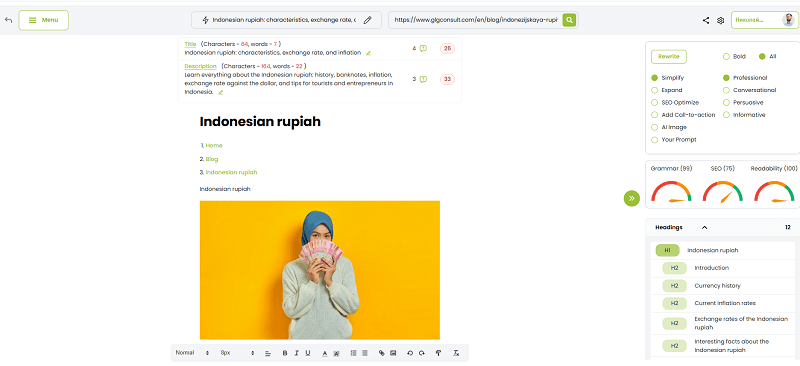
It's convenient for me to do everything turnkey here: metadata, keywords, checking grammar, and even generating some blocks via GPT — it's great at helping refine the text.
Optimizing metadata and structured data
GPT reads the title, description, URL, and H2 structure even before opening the page. Your snippet should be:
- relevant enough to reflect the topic;
- incomplete enough to prompt GPT to open the page;
- supplemented with OG tags, Schema.org/Article, Author, Publisher, FAQPage, BreadcrumbList.
Schema markup can be checked in the structured data validator at the link.
We check for OpenGraph markup via our extension.
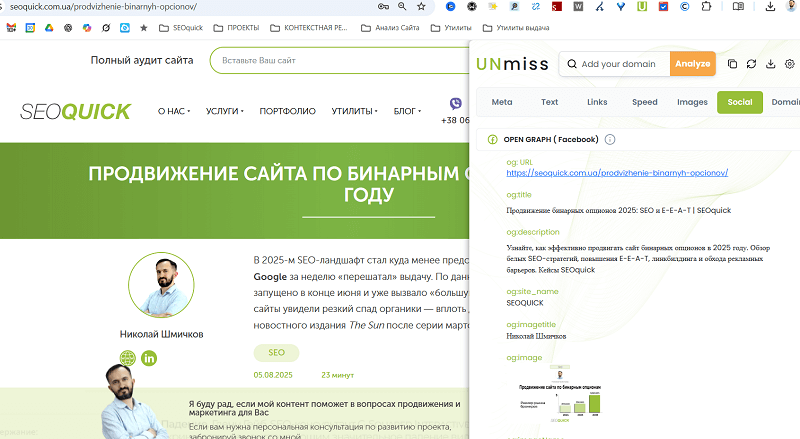
 Add the extension to Chrome
Accounting for multilingualism and URL structure
Content can land in results in other languages. For this:
- we don't do a direct GPT translation;
- we first write in the native language and translate manually or via editing;
- we adjust the URL: /product-name-2026/ — if the topic is annual, /product-name/ — if it's evergreen;
- we keep URL nesting no deeper than 3 levels: /seo/technical/canonical-vs-noindex
Publishing, tracking, and scaling
After publishing:
- we add the article titles (Title) to SERanking — this lets us quickly track their appearance in search;
- we track AI traffic in analytics by markers (utm_source=chatgpt.com, perplexity.ai);
- we adjust topics and strengthen citability;
- we update outdated articles every 6-12 months.
Creating unique, expert content
Many will mistakenly think here that there's the recipe — fire up GPT to generate content and enjoy life.
Not so fast.
ChatGPT more often references sources that hold high authority in the niche (E-E-A-T: experience, expertise, authoritativeness, trustworthiness), give precise, structured, and useful advice, and regularly update their content.
The value of the material
For ChatGPT to be able to recommend your site or material, it must see value in it that's understandable even to a machine. By “uniqueness” here we don't just mean the absence of copy-paste, but that you give the user something that isn't in other sources: personal experience, practical cases, non-standard conclusions, expert analysis. GPT gives priority to materials that can be inserted as a ready-made solution into an answer.
Content that contains:
- step-by-step instructions;
- tables;
- lists;
- comparisons;
- decision-making schemes;
- examples of real cases and situations where the information can be applied,
is perceived as more useful. As an example — a screenshot from my article with a typical instruction that you can simply “take” turnkey.
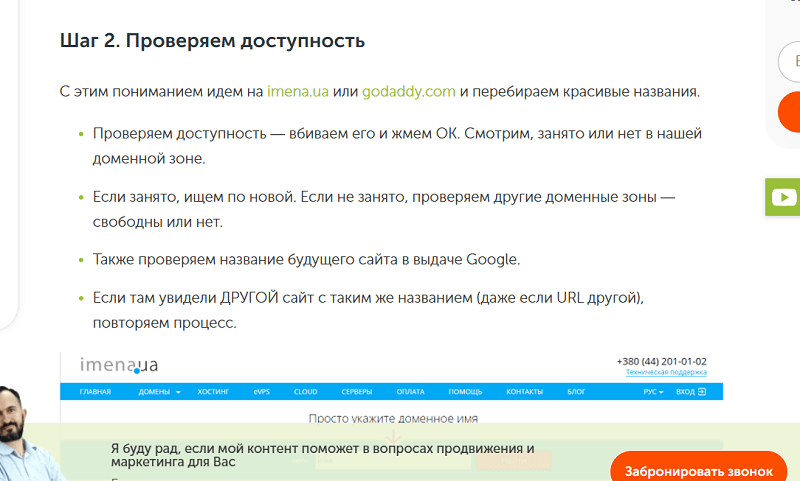
The more examples and data you bring from your real experience or analysis, the higher the content's value. My article about promoting SEO for the Rozetka site is a pure example of how to land both in GPT citations and in Google's TOP.
GPT can assess the density of “new” information:
- avoid filler, preambles, and platitudes;
- every paragraph should deliver a new detail, qualification, or fact;
- texts that cover sub-aspects of the topic work well, even if they weren't explicitly requested;
- the less the material resembles a “rewritten Google TOP,” the higher the chance it gets noticed and used.
The GPT model is trained to distinguish articles written “to tick a box” from articles where the author genuinely understands the topic. GPT can tell shallow text apart from deep treatment. This is visible by:
- the presence of detailed explanations of complex concepts rather than a retelling of the obvious;
- analysis of causes and effects rather than just a list of features or steps;
- surfacing nuances in the topic that are rarely discussed.
The more contextual information there is, the higher the probability the AI will choose the material as a source for generating an answer.
The AI can recognize that the author is deep in the topic by:
- the use of terms and concepts characteristic only of experts;
- mentions of internal processes, data, mistakes, and practices that only a specialist knows;
- the formulation of their own conclusions;
- the presence of alternative approaches to solving the task;
- the use of metaphor and interpretation.
Structuredness of the material
The second aspect is structure. Content must be logically organized: headings, subheadings, lists, emphasis. Even if you write a long text, it must read easily, without mush.
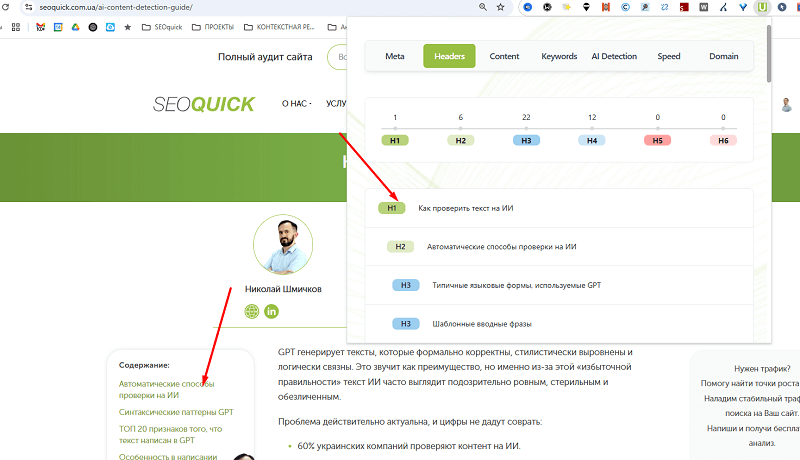
The machine learned on hundreds of thousands of good articles, and it singles out those where it's clear what each paragraph is about.
So follow simple rules:
- One thought — one block. Each logical fragment of text should cover one specific idea or question. If a paragraph is at once about the technology, and the comparison, and the mistakes — GPT won't be able to clearly “glue” this block to the right query.
- The logic of moving from general to specific. Good content is built on the principle: first the problem or context, then the solution or explanation, then a qualification, example, or consequence. This is a universal pattern that GPT can identify and prefers in answers.
- A hierarchy of meanings in headings. Each heading should denote a topic, not just a word. GPT uses headings as a map of meanings: if H2 denotes a stage, H3 is a step within it. When everything proceeds sequentially — the AI reads the structure as a logical path.
- Semantic transitions. It's important not just to split the text into parts but to connect them — to show why the reader should move from one section to another. GPT evaluates texts as “cohesive,” and if one block doesn't logically continue the previous one — it becomes “dangling” and doesn't make it into the answer.
- Conclusions within sections. Each section should end with something: a conclusion, a generalization, or an interim summary. GPT pays attention when a thought is complete — and can use such a block as a standalone answer.
The last point is just a genuinely interesting moment. In my article about how to check text for AI, I talked about this block structure of writing content. And it turns out:
To land in AI, you need to write like AI. And at the same time write better than AI — because it's just a machine, and its knowledge is limited.
Live, verified authorship
The third aspect is real authorship. The author must be a living person with a real name and profiles on social media.
What to do:
- A visual “About the author” block with a photo, position, and experience.
- Preferably with internal linking to the team or project page.
- Include a regularly updated publication date and editing dates (mandatory!)
- In the Author structured data, use SameAs to specify real links to the author's social profiles (I have my LinkedIn listed).
"@type": "Person",
"name": "Nikolay Shmichkov",
"jobTitle": "SEO expert",
"url": "https://seoquick.com.ua/team/nikolay",
"sameAs": [
"https://t.me/seoquick_company",
"https://www.linkedin.com/in/malefictum/"
]
Be sure to add an “About the author” block, or at least the expert's name, if you want the material to be perceived as expert.
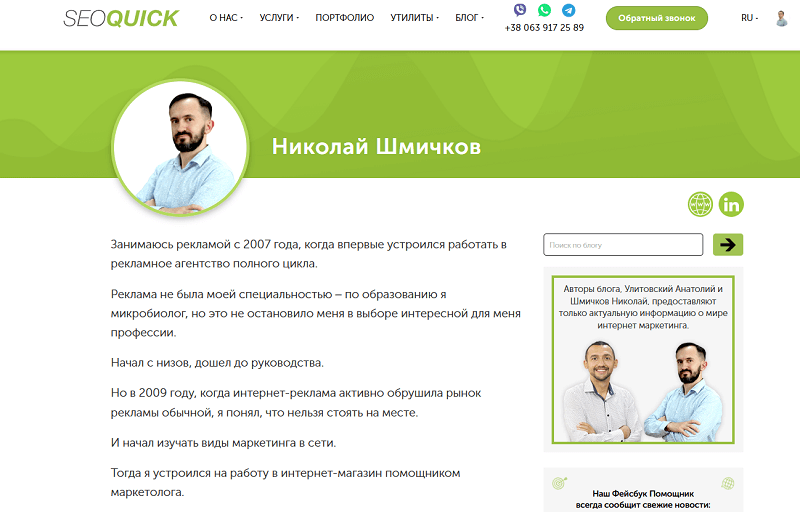
If there's a specific person attached to the content, and they're publicly present (on social media, on other sites), this creates additional trust.
The more such signs of expertise — the higher the chance ChatGPT perceives your article as reliable and useful.
Link building
Classic link building (SEO links for PageRank) — doesn't directly affect whether GPT will use your site in its answers. GPT doesn't evaluate a link profile the way Google does.
Myth 1. Links affect ranking in GPT
External links don't directly affect GPT answers, but they help your site rank highly in Google and Bing. And since GPT often builds answers based on the first 3-10 search results, links work “in the background” — improving visibility in the results and increasing the chance of landing in an AI answer. I talked about this in the chapter “how ChatGPT search works.”
Myth 2. Dofollow links matter
Unlike Google and Bing, you don't care about links for the sake of DR, PageRank, or other things. Yes, indirectly this affects ranking, but not directly. But to say links aren't needed at all would be a half-truth.
- If your content is frequently mentioned on third-party resources, especially in blogs, articles, and forums — it can be noticed and added to GPT's knowledge base at the next update.
- The more “natural” links there are — the higher the chances of getting into Common Crawl or other datasets.
The probability of getting into the base is, of course, low, but quality content under your name on resources GPT trusts can be very useful to you.
If your content is mentioned on authoritative platforms (for example, technical blogs, forums, official resources), GPT may perceive this as a sign of reliability. Such content is more likely to be accounted for when forming AI answers, especially if it makes it into training datasets.
- When gathering fresh information, GPT gives priority to sources with high authority.
- In the digital field, for example — if you're referenced by W3C, GitHub, StackOverflow, SEJ, Wikipedia, Dev.to, Habr, etc. — this strengthens the perception of your site as a reliable source. You can ask GPT itself for a list for each niche.
Myth 3. GPT “understands” a link like an SEO bot
GPT doesn't analyze the anchor, the dofollow/nofollow attribute, or the internal structure of links the way Google does. For it, what matters is where the link is located and in what context:
- Is it used in proof?
- Does the author reference it to justify a position?
- How relevant is the content of the donor page?
GPT doesn't “count link weight”; rather, it evaluates whether the link strengthens trust in the material. So the classic work on anchors, “heavy” pages, and placing dofollow — makes no sense in the context of GEO.
Myth 4. The more links — the higher the chance of landing in GPT
Mass link placement doesn't work for generative AIs. GPT doesn't consider the number of links a quality metric. It doesn't even have such a base or calculation of this data. It evaluates citability in authoritative and topical sources, not the number of mentions.
What you can confidently exclude from your strategies if someone tries to sell it to you:
- Crowd marketing.
- Web 2.0 links and links from site networks (PBN).
- Links from exchanges (Collaborator and others).
- Links on junk sites (there are many, including hacked sites) with high DR.
- Directory sites (catalogs, directories). Yes, there are exceptions, and you can find them out from GPT.
10 natural links from a verified base of domains (precisely those the AI selected) and industry blogs are 100 times more valuable than 500 links from a PBN network or no-name catalogs. GPT perceives such “junk” links as noise and ignores them.
For Ukraine, I've compiled a list of sites GPT “checks” when it looks for information.
| Main directories site:ua-region.info site:youcontrol.com.ua site:opendatabot.ua site:dzo.com.ua site:biznes-guide.com.ua site:biznesrada.com site:biznesua.com site:ua-company.com site:orgpage.com.ua site:biznesmarket.com.ua | Offer aggregators site:hotline.ua site:price.ua site:lun.ua site:domik.ua site:24.ua |
| Legal information site:prozorro.gov.ua site:clarity-project.info site:edr.gov.ua site:court.gov.ua | Catalogs and reviews site:clutch.co site:goodfirms.co site:topdigital.agency site:it-rating.ua site:firms.ua |
| For checking job listings site:work.ua site:rabota.ua | For estimating company size site:linkedin.com site:crunchbase.com site:trustpilot.com |
| For the crypto-exchange niche crypto exchange Ukraine OR crypto exchanger Kyiv OR best USDT exchanger site:bestchange.net OR site:cryptonator.com OR site:rates.fm OR site:kurs.expert OR site:obmenka.ua OR site:coinhub.ua OR site:btcbank.com.ua OR site:coin24.com.ua OR site:crypto-obmen.com OR site:kuna.io OR site:whitebit.com OR site:forklog.com OR site:minfin.com.ua OR site:biz.censor.net OR site:youcontrol.com.ua | For dentistry site:doc.ua site:likarni.com site:24dentist.com.ua site:mydentist.ua site:health.ua site:moz.gov.ua site:prodoctorov.ua site:itmed.org site:medcentre.com.ua site:doctortap.com site:topclinic.com.ua site:biz.censor.net site:youcontrol.com.ua site:linkedin.com |
An example search query
reliable crypto exchangers Ukraine 2026 site:bestchange.net OR site:coinhub.ua OR site:kuna.io OR site:forklog.com
Video and visual content in AI answers
In most GEO strategies, everyone bets on text. But GPT increasingly assembles hybrid answers: a paragraph + a link to a video + a brand mention. And if your video isn't there, it'll take someone else's.
In GPT promotion, video is an underrated channel — and probably one of those many would never have paid attention to. Today generative assistants (ChatGPT, Google Gemini, Perplexity) increasingly include video in results or build answers on top of it, especially in “practical” niches:
- Dentistry, medicine, cosmetology — explaining procedures, before/after visualization.
- Finance, crypto, investments — reviews, explaining complex terms, infographics.
- Repairs, DIY, automotive — instructions, step-by-step videos, tool comparisons.
- Education and guides — “how to do,” “what to choose,” “what's the difference”.
YouTube has long been built into Google's algorithms, and with the arrival of AI Overviews and video integration in ChatGPT (via links and players) — these clips started landing right in the answers.
For a query like “video instruction {your query},” GPT inserts links to YouTube clips (in ChatGPT with active search and in Bing Chat). It also cites the video description if it clearly structures the answer to the question. And then it forms a short answer based on the video's audio transcript (from the subtitles).
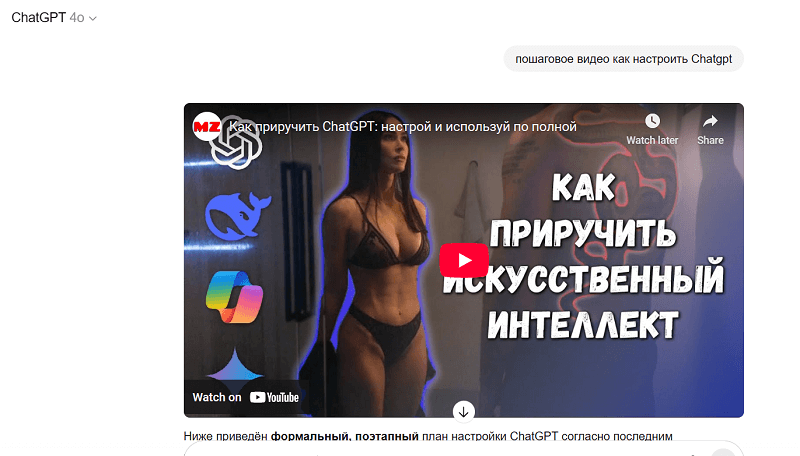
It also references Shorts / TikTok for a number of topics with lots of user cases or trends (“what's popular now”).
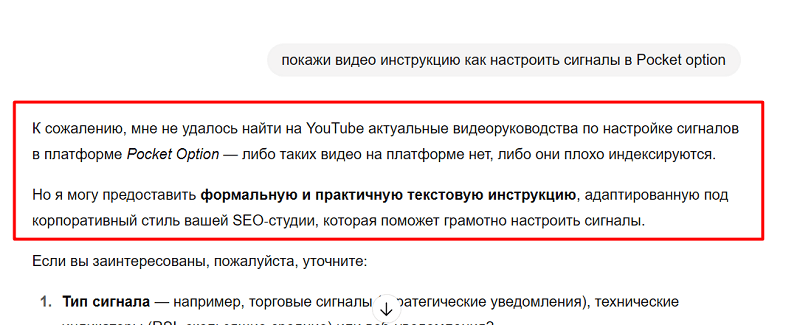
What I noticed — for a number of questions it “can't” find a video instruction. Although they may exist — but on other platforms.
What should you do to capture this kind of traffic?
- Make video versions of key articles → upload them to YouTube with a detailed description, timecodes, and a link to the article.
- Use the same structure: use the same H1 as the video title, and place the H2/H3 subheadings into timecodes. GPT reads the description, reads the headings, and reads the subtitles.
- Be sure to add to the description: keywords, a link to the article, a micro-FAQ (so GPT “picks it up”). Don't forget about tags and hashtags — because if you don't rank inside YouTube / TikTok / Google — GPT won't find you.
- For Shorts content, always aim for a question + a short answer (15–60 sec). Don't pour filler into the middle of the clip.
Also read my video marketing guides today

Conclusions
This turned out to be a fairly substantial (more than 5,000-word) guide for beginners, but its main idea is to convey that we're entering the era of a new kind of promotion, and it's likely that GPT specifically will change user behavior.
GPT optimization (GEO) isn't a replacement for classic SEO, but its modern extension. It requires a new logic: writing not only for people and Google, but also for language models. So SEO specialists won't be left without work — on the contrary, there's only more of it.
AI assistants form answers from real content, and your task is to make that content easy to perceive: structured, expert, accessible. No content from you — and GPT will take something similar from a competitor.
The technical foundation is critical: clean HTML, a properly configured robots.txt, structured data, and the site's openness to AI bots directly affect the chance of landing in the results. Keep in mind, it sees your site like a search robot from 10 years ago.
Strong content is the foundation of GEO. GPT picks what delivers a ready answer: instructions, tables, examples, comparisons, conclusions. Content must be not just unique, but genuinely useful. And the usefulness is judged not by the user, not by Google, but by GPT specifically.
Link building and citability work indirectly: it's not the number of links, but mentions on trusted resources and your presence in those domains GPT draws data from. And the list of them is quite easy to compile if you know how.
Video and visual content are increasingly integrated into AI answers. Plain text no longer dominates — short clips, instructions, and reviews strengthen visibility on generative platforms. And as we said — create YouTube channels and convert your articles into video.
To be recommended by GPT — you need to write like AI, but better than AI. A transparent structure, honest conclusions, real experience, and verified authorship — that's what makes your material a source for an answer. Even this article was written with AI's help, of course — not in a single prompt (but in more than 500). It also helped check and proofread it.
SEO optimization for GPT and AI answers: GEO guide for 2026
How to prepare a site for visibility in ChatGPT, Gemini, AI Overviews, and other AI systems: technical base, content, schema, llms.txt, and conversion.
Read →
50+ mega-prompts for ChatGPT and Gemini: the SEO specialist workflow for 2026
A practical SEO prompt library for keyword research, content, GEO, technical audit, UX, and conversion, with rules for checking AI output.
Read →
How to create content for AI answers: AEO and GEO guide for 2026
How to create pages that can be used in AI Overviews, ChatGPT, Gemini, and other answer systems: structure, sources, entities, and UX.
Read →Want to apply this to your site?
We will review the current situation, find the first growth levers, and suggest a practical working format.