Content Strategy for Crypto and Trading Projects
Learn how to create unique content for crypto, fintech and trading sites in 2026 so you grow in Google and get cited in the AI answers of ChatGPT, AI Overviews and AI Mode.


Affiliate sites that earn from reviews of exchanges, brokers and trading services don't compete on referral payout rates — they compete on the quality and freshness of their content. In 2025, a new task was added to the familiar race for SEO positions: getting into the generative answers of ChatGPT, Gemini and Google AIO. Without a clear content strategy grounded in query analytics and the demands of LLM search, a resource loses visibility and traffic — and therefore revenue.
This article shows how to plan, create and promote content so that it satisfies the algorithms of classic search engines and gets cited by neural-network assistants at the same time, driving your trading project into steady growth.
Introduction
Four years ago I believed that building a content plan was the same for any niche. You know the drill — gather the semantic core, cluster the informational keywords, and there's your blog. Write articles. I wrote them and realized the result was nonsense. Only 3% of the articles got traffic — and those were exactly the ones built around very low-frequency keywords.
Two years ago I understood that the issue was thin content — you have to hunt for that "thin spot" and aim at it. It worked, traffic started flowing, and the blogs delivered results.
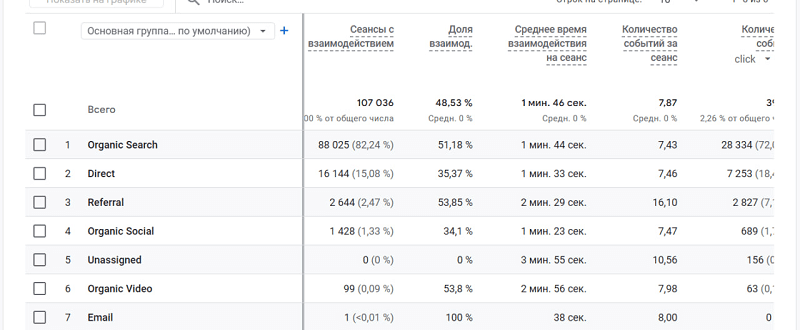
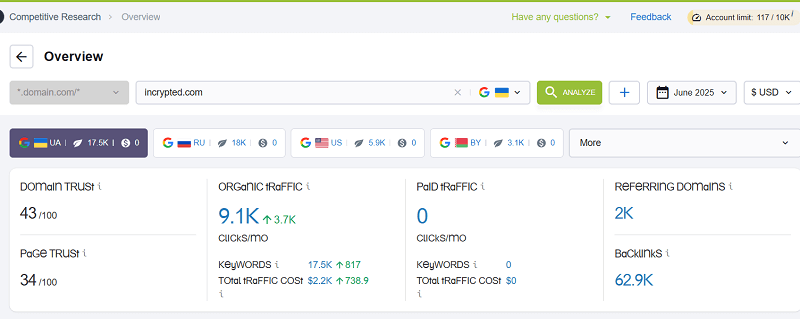
Organic traffic results for the binary-options project
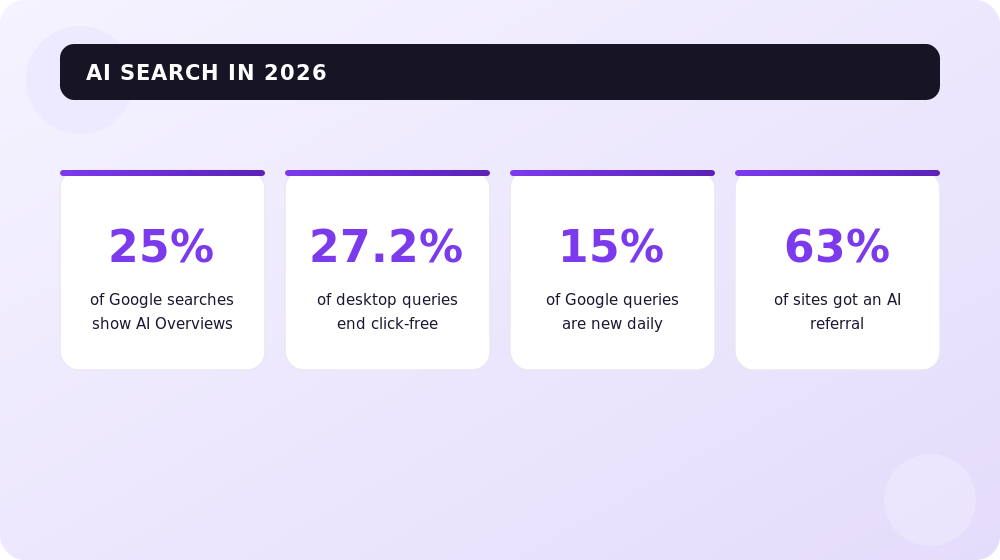
But with the arrival of AI and the rollout of AI Overviews in the SERP, we ran into the fact that the old methods stop working. By the start of 2026, AI Overviews already appear in roughly 25% of all Google searches — up from 13% in March 2025, and the share keeps growing month over month (Semrush). In parallel, Google launched a separate AI Mode — a full-fledged conversational search that has already passed 1 billion monthly users.
In 2025, trading and FinTech content has to compete not only with other sites but with AI that answers user queries instantly.
If you find articles from 2022 or earlier in search, you can safely ignore them. Simply creating content based on competitors' "best pages" and repackaging it on your own site does not work.
What are the challenges right now?
- Content oversaturation in the niche.
- The growing influence of AI answers (Grok, ChatGPT, Perplexity) on search traffic.
- Some content is outdated — but far from all of it.
- Shifts in user behavior: the move from text queries to voice and visual ones.
- Unique challenges for affiliate sites in the binary-options niche — the content has a more complex structure than basic blog posts.
First, let's agree that EEAT, in-house authors, and author profiles promoted on social media — you grasped all this in the previous article and have already set it up. Your only task now is how to start planning content work.
So, point by point, we'll break down each of these challenges, and I'll use my own experience to explain how I achieved results.
Order a content plan for your trading project today!
Book a consultation and fill out the brief!
Finding the missing content behind queries
In July 2025, Google confirmed that 27.2% of desktop queries in the US end in a "zero click" because of AI Overview. Users simply read the content straight from the SERP. And someone is already there — the goal is for that someone to be you. That's possible if you write about things that have no answer yet.
This is the first task, and today it stumps absolutely everyone. No matter how many times I asked SEO specialists applying for a job with us "how do you write content that will definitely take first place," I heard everything except the simple answer:
You have to write the answer to the question that nobody has written about
The most interesting part is that you need neither Ahrefs, nor SERPSTAT, nor any of that. Every day, 15% of Google searches are completely new — never seen before (SQ Magazine).
You might genuinely wonder — so what do you do next?
But we live in 2025 (at the time of writing), and in general — we have news sites we can learn a lot from.
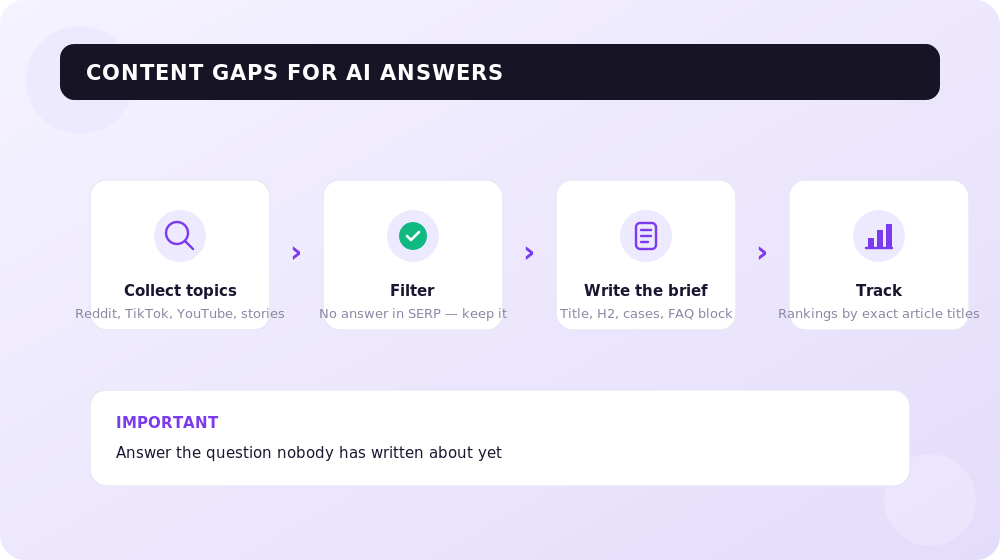
Step 1. Start collecting topics like these
Use everything for this: gather questions from Reddit, generate questions, check those questions for sense and, of course, look at the SERP. Watch TikTok, YouTube and Instagram — what people post (which questions) in stories. Collecting such queries is a whole routine process.
But while gathering queries, don't forget — collect topics right away into future content hubs.
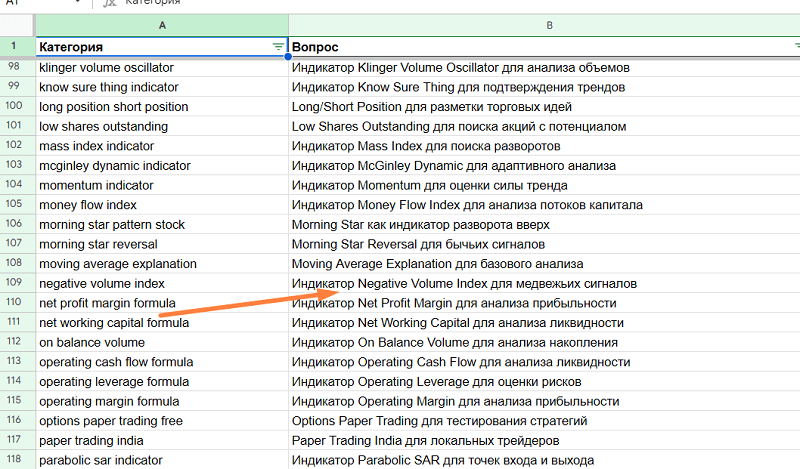
The logic of working with the file is roughly built on searching (generating queries) and, off the back of that, generating news headlines. Once you've gathered a list of more than 1,000 topics, move to the next stage.
Step 2. Filter queries against the SERP
Just type the query into Google and check whether there's any answer-content for your question. Important — if the TOP already has an article whose content answers your query (even if the Title differs a little), skip it.
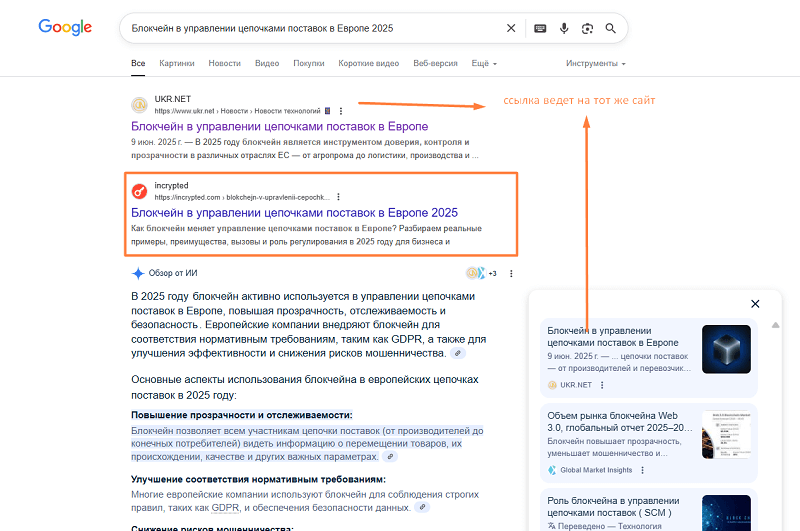
But if the question is answered only partially, not fully — keep it. For example, the query for this very article returns nothing but junk in the SERP.
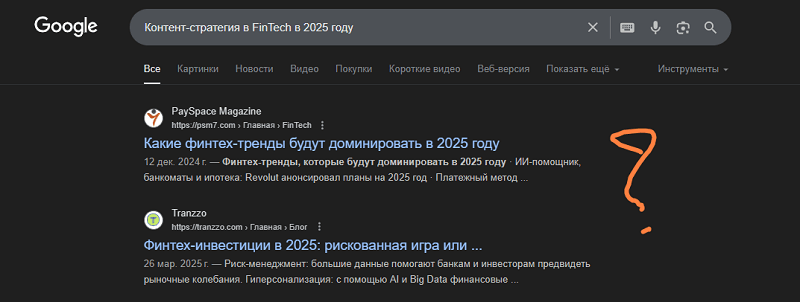
And if you drop the year — it shows that same outdated 2022 article.
Step 3. Write lots of briefs
Remember that you need to send such content into production right away. Don't share with anyone that you found a given piece of content — just write the articles straight away.
Right then and there, create a content-plan file, start writing content from it, and publish it on your site quickly.
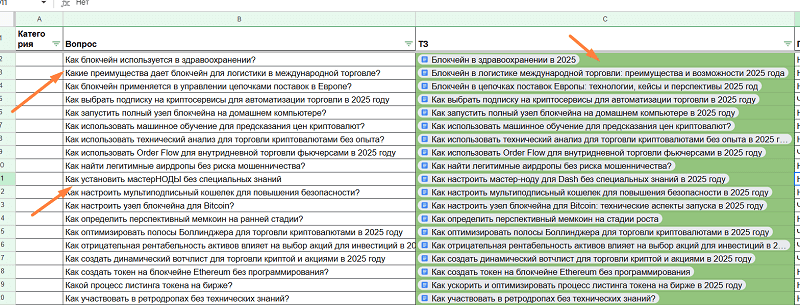
To automate work with briefs, you'll have to set up your own GPT, and you definitely shouldn't do it in the basic chat. You may need to write special prompts for your project and work through the API.
Such a brief is built on a simple principle:
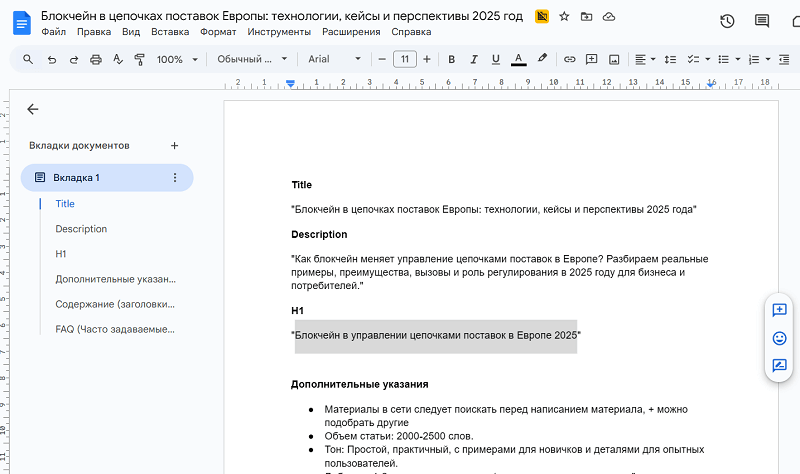
- You write the Title, Description and H1.
- You shape the structure of the H2 headings.
- For each H2 heading you spell out what it should contain.
- You add cases and instructions on how to find them (for example, the search queries the author should use to find and study the results).
- You compile a FAQ and add it at the bottom of the article.
According to Ahrefs Brand Radar, domains "with a rich FAQ structure" rank among the top 10 sources for three popular LLM platforms: ChatGPT, Perplexity and Google AIO.
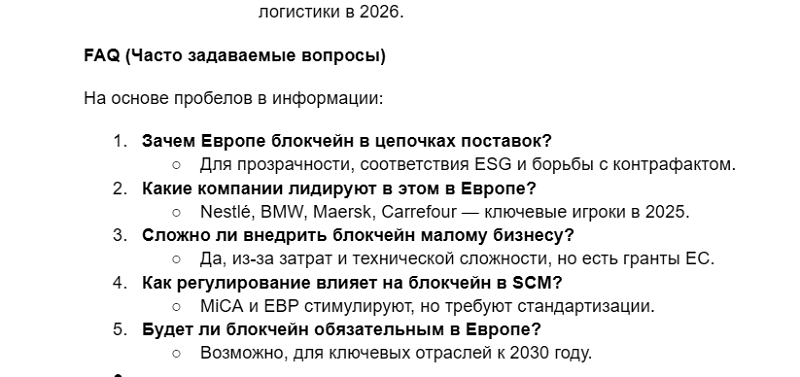
When you work on each heading, pay attention to what should be covered and how to lay it out in each one. A specialist will easily understand it, and it makes it simpler for GPT to build out the structure of the text.
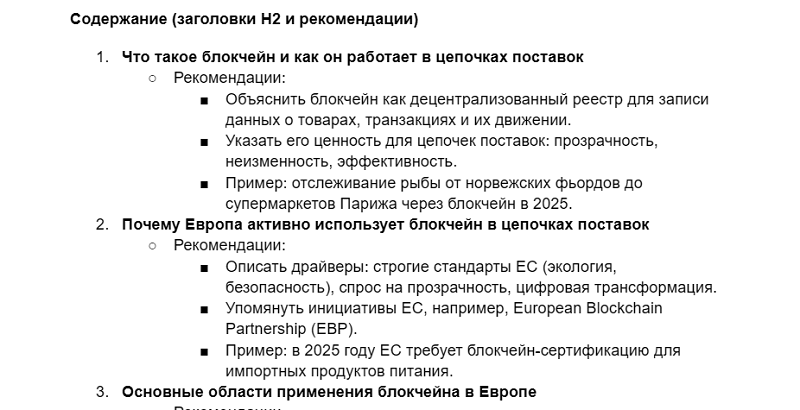
Since there will be many briefs, you need very strong automation here. I produced more than 100 briefs in a single day for this project.
Step 4. Track the results
Keep in mind that the topics you write may not be represented in search yet, so it's easy to track position simply by Title — if we showed up, everything's fine. We recommend adding the Titles of your articles, exactly as they are, into SERANKING as queries. In exact match they will definitely appear in search.
How does such a strategy affect traffic? Just great. You get a solid increase in organic traffic, and that will carry over to your AI traffic in the future too.
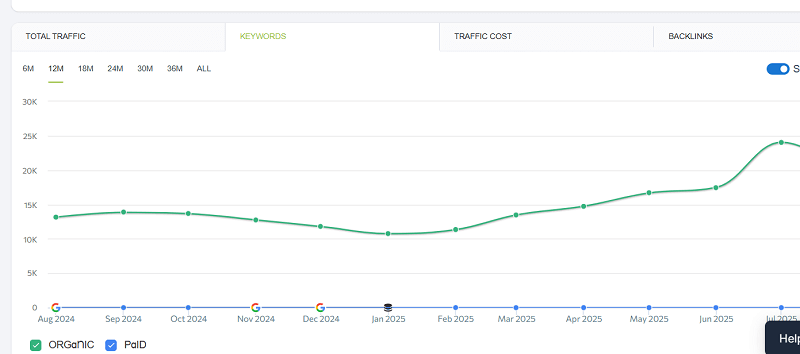
And thanks to highly specialized articles, the site grows the number of words it gets traffic for — and as a result, you'll appear in AI answers more often, because that counts as a ranking factor for AI too (provided you work the target cluster down to the smallest details).
Optimizing content for AI answers
Ahrefs confirmed that as of February 2025, 63% of sites received at least one referral from an AI assistant (ChatGPT, Perplexity, etc.).
In my previous article I explained that you can simply adapt content for AI so it gets included there. But in this case I'll share how to do it so you land specifically in the trading and fintech niche (and even in the binary-options niche).
From the previous article on optimizing content for AI answers, we remember what our material must contain:
- a clear Title but a provocative Description;
- the H1 should match the key query 1 to 1;
- the H2 structure — here you can even trust AI generation;
- the FAQ — take questions from People Also Ask and ask AI to format them into questions;
- write in the style AI would write, but season it with facts, comparisons and external links.
The essence boils down to almost the same thing we discussed above. But with a few nuances. We have to invent questions. The reason is that people may not search for them this way — no such headings exist. But you can find the content you need, for example, on TikTok or YouTube.
For instance, I was researching the topic "What does Market Cap show" and spotted the topic "How to find a token's market capitalization."
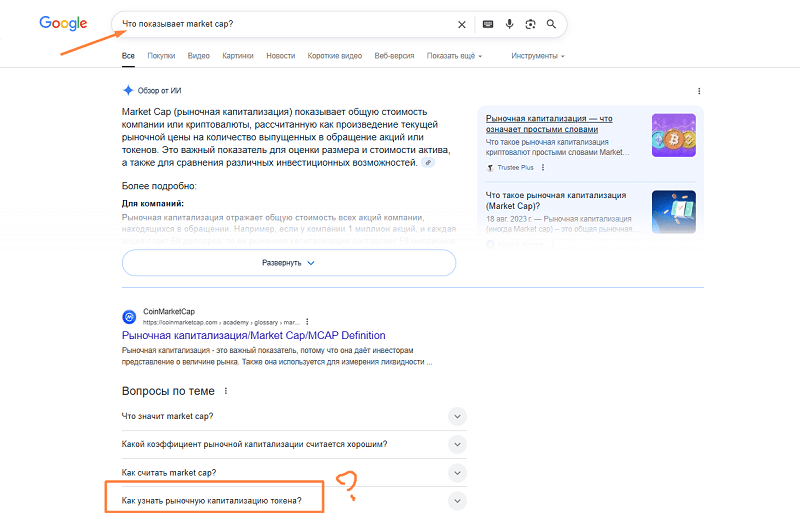
I saw that this query had an AIO answer but no clear article on the topic. Yet the AI Overview essentially "wrote" the skeleton of the future article for me.
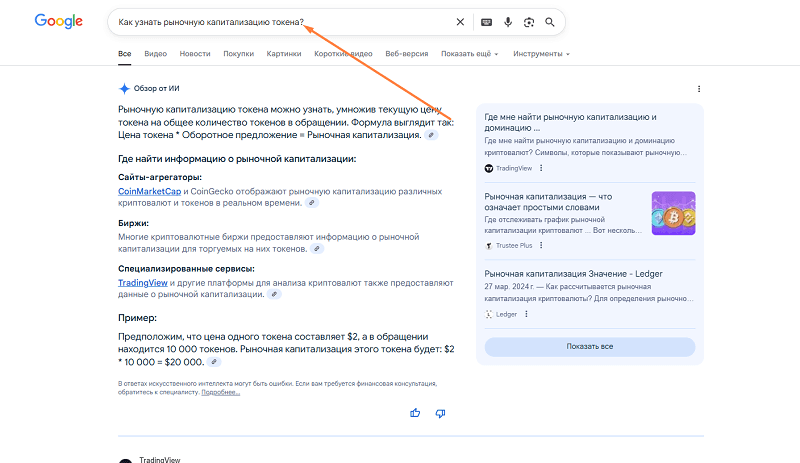
The rest is a matter of technique: write a brief for this query, produce a more complete article, gather facts, add instructions and screenshots — and we get excellent material.
An analysis of 30 million citations showed that ChatGPT, Perplexity and Google AIO pick different "favorite" domains; landing in the top 10 on any platform multiplies your visibility (Nick Lafferty).
Can some of the content be outdated?
The trick here is that AI won't surface us if we write about something that's already widely known. But if there's no answer to it — it may well latch onto us as the only one who answered it.
For example, I once had a query (which the client never implemented). And competitors, literally a month later, immediately popped up with this topic. Why?
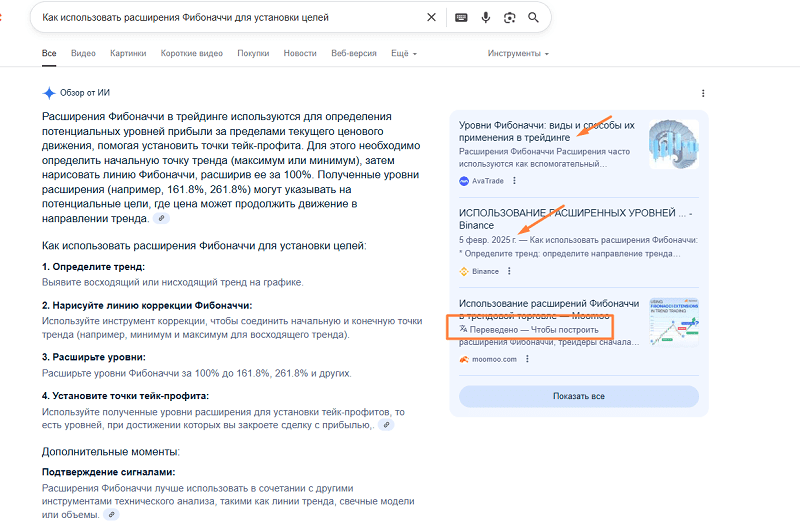
Because it turned out to be the simplest thing of all — I found this topic via YouTube and pulled its keywords. Apart from YouTube, hardly anyone had broken this topic down. But what do I see today — an AI answer has already been generated for it. So the topic was skipped here, and we were late. Someone else beat us to it.
But we decided to work with a topic like this:
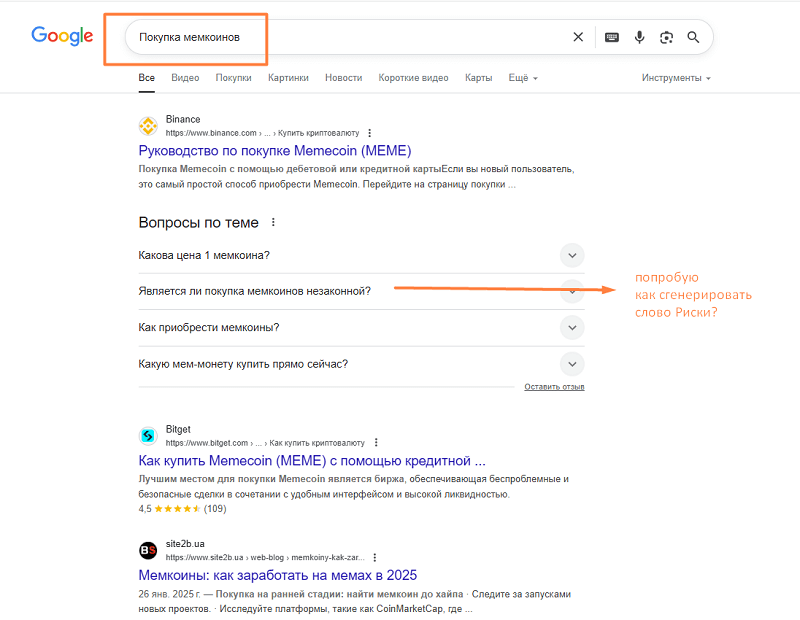
Buying memecoins — I figured this keyword had decent search volume. And you can get into a hub of AI answers if you find a topic no one has examined. I tried running through a multitude of words (my keyword generator helped) — and I did find a topic where the answers were poorly presented. Back then Google's AI answers didn't exist yet (it was winter), but I decided to try building a brief for this project too.
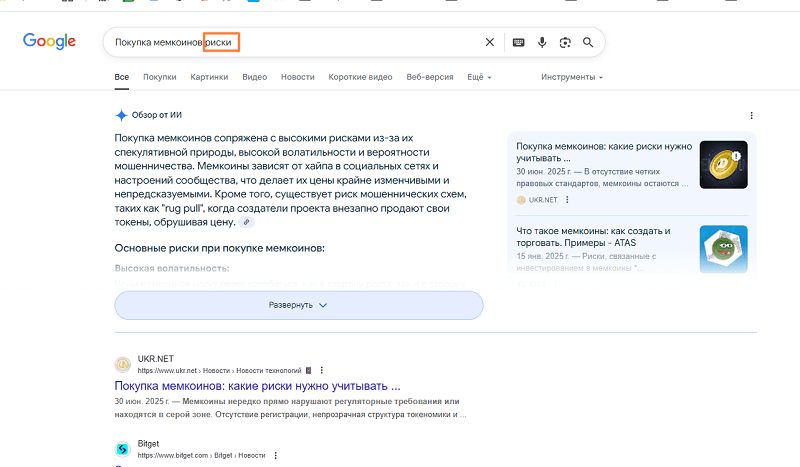
In the end, a brief was assembled for this topic, the headings were optimized with AI (yes, the skeleton was built through a specialist's consultation, and AI then picked the wording). Often the topics I found genuinely required the opinion of experienced people — because without experience in this niche you can generate complete nonsense.
The result — the article ranks #1 (for the first reason, and in the AI answer it's also #1 as the only one that truly covers the answers).
Multilingual content
Remember that your content can rank perfectly in another language. And there's nothing unusual about that — around 30 popular languages exist worldwide in which people search the fintech niche. English covers 49.2% of sites, but the combined share of Spanish, German and Portuguese already exceeds 14% (according to W3Tech).
Among the languages you can safely add to your site are the following:
- English.
- Arabic.
- Hindi.
- German.
- Spanish.
- Portuguese.
- French.
- Ukrainian.
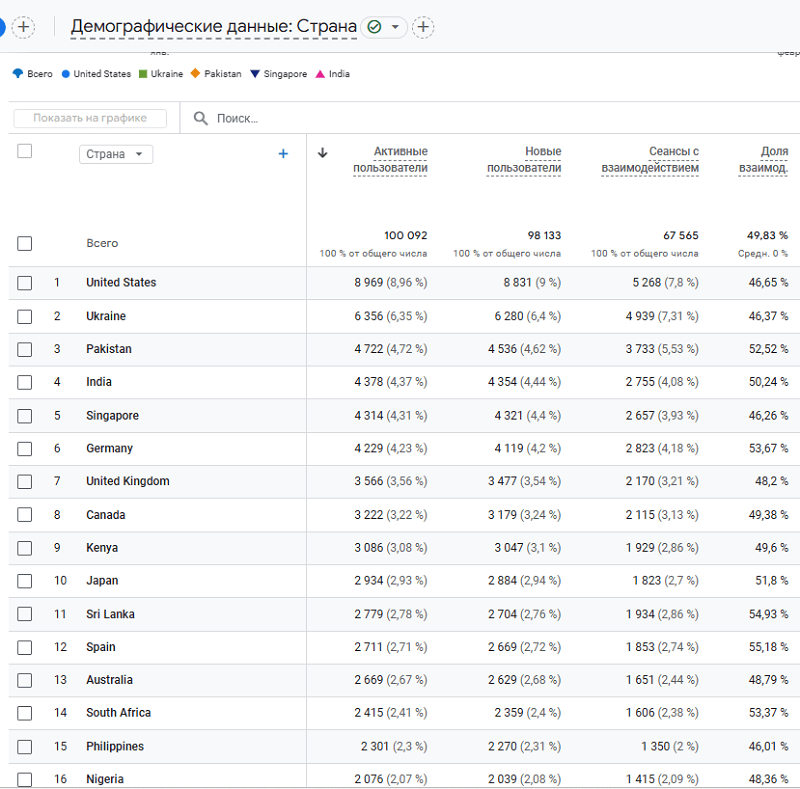
As proof — here are the country-by-country traffic stats of our fintech project (over 1 month).
Multilingual support should be set up by translating each piece of content into the other languages. But it would be a foolish mistake to entrust the translation to GPT — you'll simply lose everything.
- You first write the content in the language you (i.e., your author) understand.
- You translate the content carefully, chapter by chapter, through GPT.
- Then you hand it to a specialist who knows the target language for editing and proofreading.
If your article is tied to the legislation of a specific country whose language isn't popular in it:
- Simply don't translate this content into other languages.
- This page won't have the option to switch to other languages — that is, the Hreflang attribute will be absent for it in other languages.
- If you do translate it after all — replace, where possible, the blocks that don't relate to the current country.
It sounds harder than it is. Your task is to ensure that blocks mentioning specifics of one country don't appear in the English article, where the reader won't be interested in reading about that country. Remember, the behavioral factor matters far more.
Complex content in the niche
In any fintech niche — from trading crypto, forex and stocks to even plain binary options — there's a high bar for the quality of the content on your site.
A key feature here is the parity between mobile and desktop. Unlike many niches where mobile traffic takes more than 70%, here we see desktop holding the largest share of the site's audience. The fact: nearly 50% of retail securities trades are made from desktops, which is why large brokers focus on web platforms (Source).
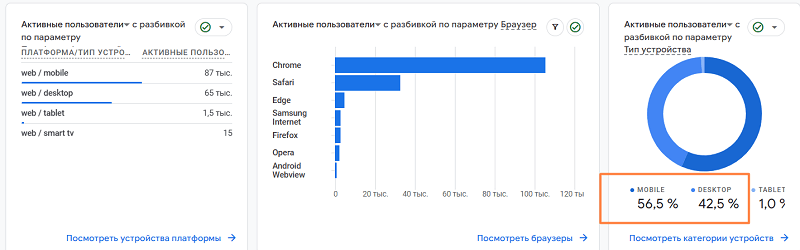
The second feature of this niche is that people barely trade or interact with brokers and exchanges from a phone (and if they do, it's more out of necessity). Most often it's a computer with a Chrome or Safari browser.
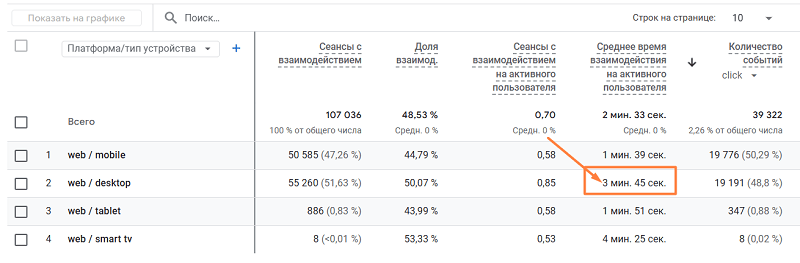
Globally, the share of desktop traffic in the financial sector is still higher than the web average, whereas across all niches combined the figure holds at 60-40% (Statcounter).
The difficulty lies not only in having to design a complex hierarchy of headings and subheadings, but specifically in building a fairly complex layout for different content types.
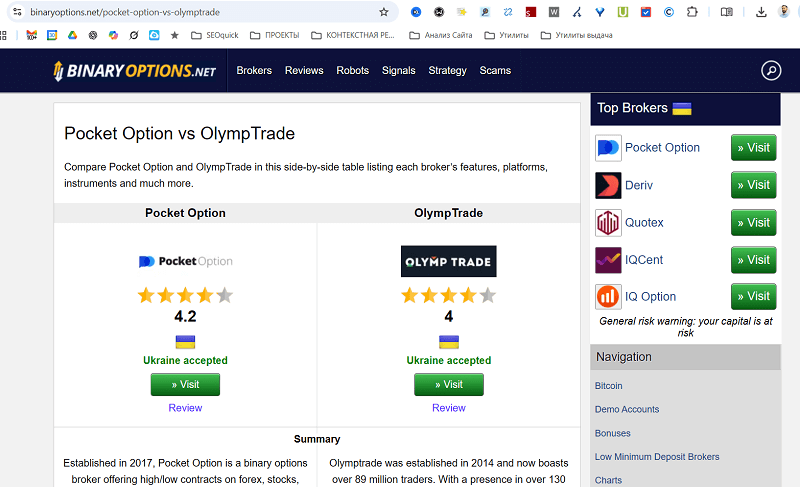
Comparison blocks
Such articles are tailored to X vs Y queries, where you compare one review against another. The content itself is purely technical, while filling it requires creating the following in your admin panel:
- tabular, updatable data for the content;
- its segmentation by meaning-based blocks;
- a layout for the blocks through which data will be displayed and compared.
Review articles
Classic reviews are no longer laid out as a plain article but as a scheme that's fairly complex in its layout:
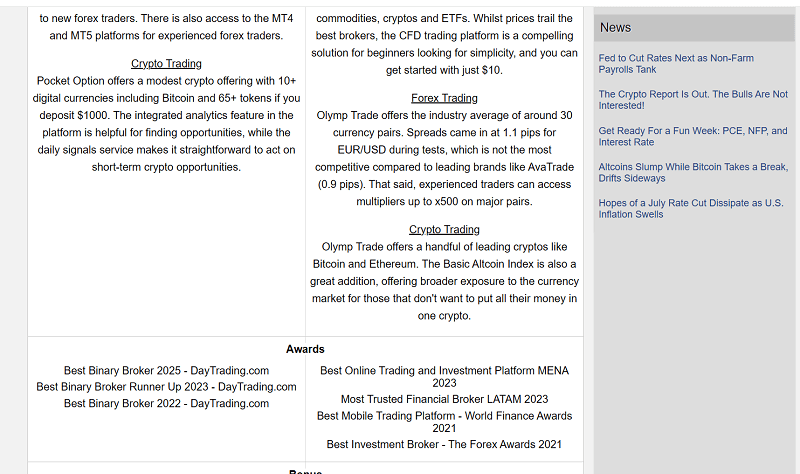
- A block with brief information.
- CTA buttons.
- The review text — here the classics apply: headings, subheadings, lists and various types of quote inserts.
- Tabular methods of presenting information.
- Pros and Cons blocks (visually distinct from a basic table).
- FAQ blocks.
- A technical-specifications block.
Content hubs
If you have content that can be grouped into blocks, conveniently gather the articles by block on a top-level page. For example, materials devoted to trading on a particular platform can be split into blocks.
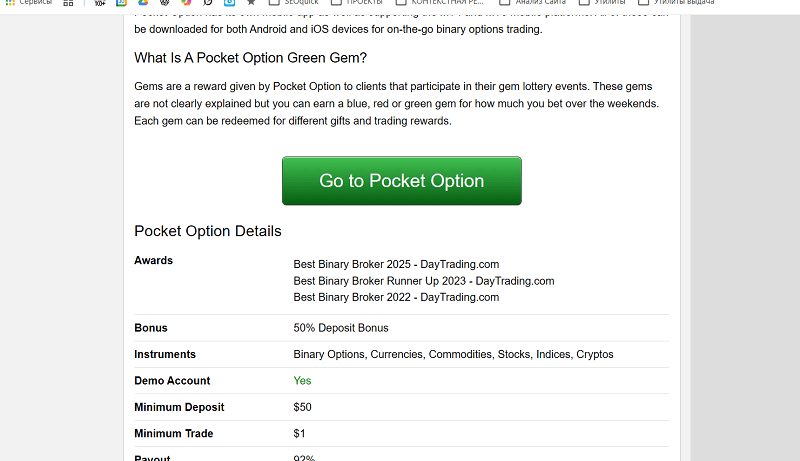
- How to use it (content for beginners).
- How to trade (content for those who have already signed up and solved the technical issues with registration).
- How to configure it for professional use (bots, signals).
- Examples of live trading and secrets (for those who already use it actively).
- Complex questions (these can be unique to each topic, for example: solving specific platform problems).
And the content hub itself is simply a pre-tailored landing page with lists of articles conveniently divided into blocks.
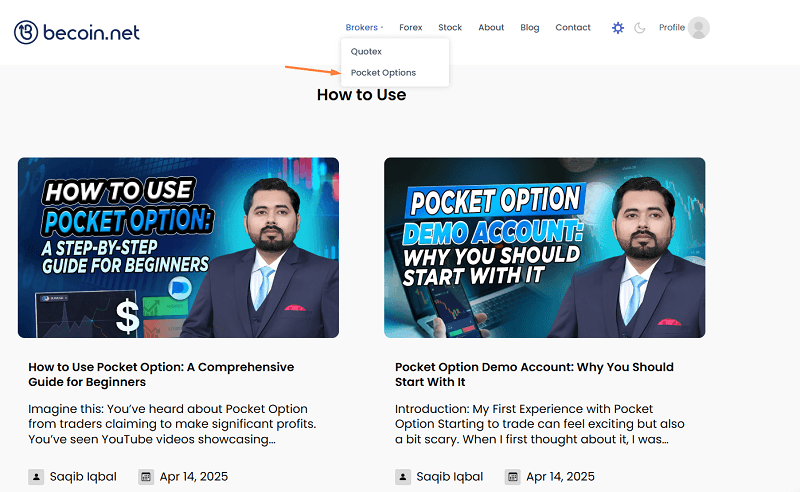
But don't create hubs inside hubs. The level should be a single one — a so-called flat structure, not a deep one.
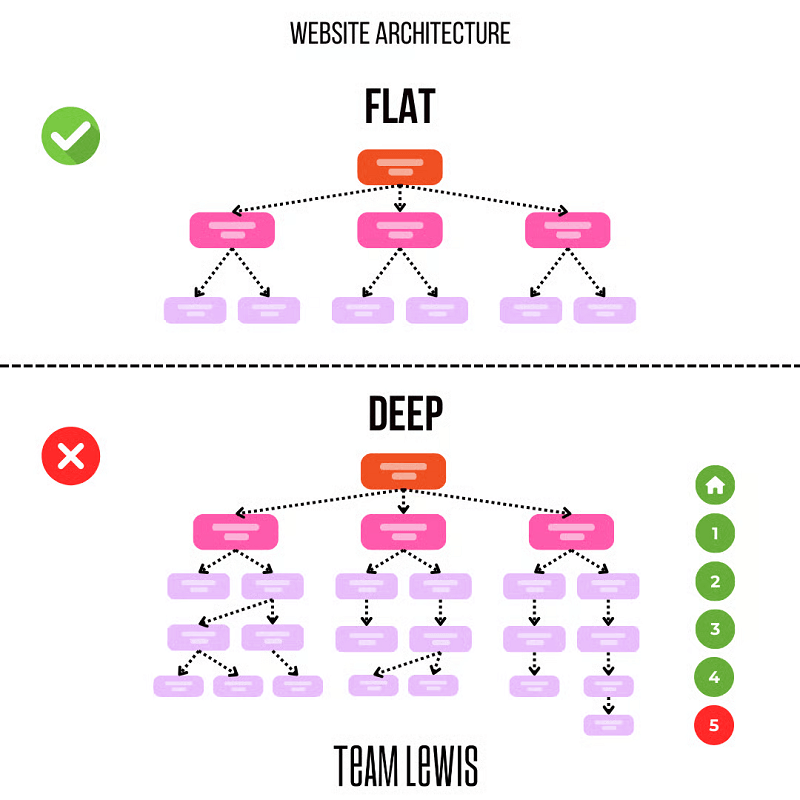
According to Teamlewis, the recommendation is to stick to a flat structure rather than a deep one. Content hubs work better when your articles are tied around a single logic, not scattered across micro-groups subordinated to one another. The more extensive the hub inside a cluster, the better the cluster will rank.
Adapting content to a new audience demand
62% of Gen Z get financial advice from social media, primarily short video formats. At the same time, 68% of crypto advice on TikTok was found to be misleading, so in this niche it's important to build the image of an expert who doesn't lie and only says verified things.
Since video content has long dominated the niche, you won't get anywhere without producing videos on a continuous basis. Your task is to set up content workflows within your team so that you release on time:
- Long-form content for YouTube.
- Livestreams for YouTube.
- Short-form content for Shorts — 25-55 seconds long.
- Short-form content for Instagram and TikTok — there the length ranges from 1 to 3 minutes.
That's why in this niche it's very important to work out what interests your audience and to choose content that will bring a huge number of viewers to the channels.
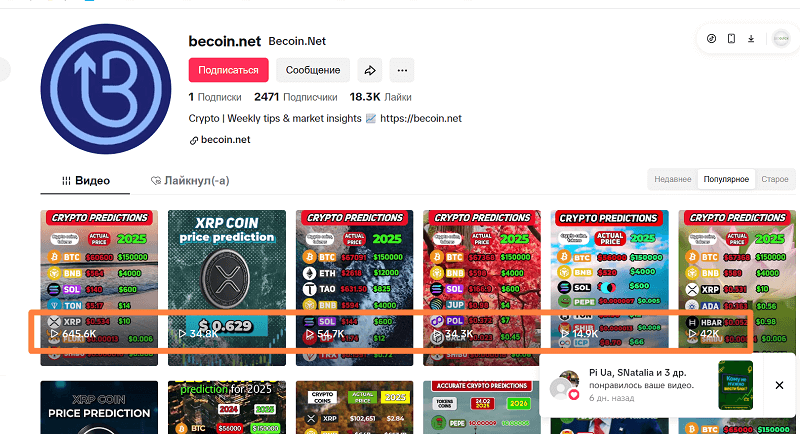
The order of content-planning work in video marketing for the fintech niche is as follows.
- Audit competitors' content in the niche.
- Collect strategies on which videos get the most engagement.
- Split topics by funnels.
- Top Funnel — the goal of such topics is huge reach. And conversion into subscribers. Here you need to find topics that immediately "filter out" the interested mass in your niche.
- Medium Funnel — at this stage you collect content that gets competitors the most views and comments (the key thing) and is as close as possible to your monetization niche.
- Bottom Funnel — it will deliver far less reach, but its job is to convert subscribers into clients. Here you can film trading sessions, create video tutorials, and run closed broadcasts with the audience.
By the time you've built the content plan, there's a task for the designers:
- Develop a brand identity.
- Work out the design elements and styles for producing videos.
- Establish a routine in the workflow (at first you'll always stall while searching for the right recipe — that's normal).
- After 10-20 "bad" and failed videos, the realization will come that you've found your style and content recipe, and you can confidently scale. So at first you can launch an alternative channel and experiment on it. Once it works, you start posting on your other, new channel, and the previous one can simply be deleted.
Instead of conclusions — cases
Reaching 50,000-100,000 users in this niche isn't hard. Even with a CTR on affiliate links of 5% or more, that's quite a lot of registrations and bonuses from forex, crypto exchanges and even binary-options brokers. Stretch that out over years, and you get a genuinely stable income source that can bring you millions of dollars a year.
But content marketing here is the lion's share of the promotion budget.
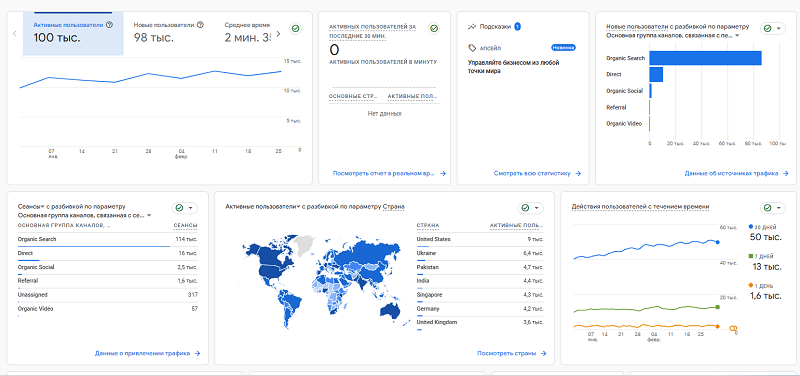
The most expensive work in this field is content planning itself. Figuring out what to write, where to write it and how to write it. What to turn into video and how to integrate it all together — more than one fintech project has fallen apart at exactly this point.
One thoughtless change of strategy, one mistake, even a single technical error — and your whole tower of Babel can collapse.
That's why it's important to run audits regularly, follow the trends and, of course, never stand still or assume you'll always have TOP traffic.
How to create content for AI answers: AEO and GEO guide for 2026
How to create pages that can be used in AI Overviews, ChatGPT, Gemini, and other answer systems: structure, sources, entities, and UX.
Read →
SEO optimization for GPT and AI answers: GEO guide for 2026
How to prepare a site for visibility in ChatGPT, Gemini, AI Overviews, and other AI systems: technical base, content, schema, llms.txt, and conversion.
Read →
Google AI Mode in 2026: What It Is and How to Prepare Your Site for Conversational Search
What Google AI Mode is, why CTR is falling and how to get cited in its answers. A SEOquick breakdown: 1B users, 93% zero-click queries and a working 2026 checklist.
Read →Want to apply this to your site?
We will review the current situation, find the first growth levers, and suggest a practical working format.